
Best STEM Toys for 3–6 Year Olds: Simple Toys That Help Children Learn Through Play
STEM is a term many parents hear when looking for educational toys.
It stands for Science, Technology, Engineering, and Mathematics.
While the name may sound complicated, STEM learning for young children is usually very simple. It happens when children build, stack, sort, count, observe, test ideas, and figure out how things work.
For children between three and six years old, the best STEM toys are often the simplest ones. Building blocks, puzzles, magnetic construction toys, peg boards, matching games, and activity sets can give children opportunities to explore, experiment, and solve small problems through play.
The goal is not to turn playtime into a classroom lesson.
The goal is to give children interesting things to do, discover, and enjoy.
What Makes a Toy a STEM Toy?
A STEM toy encourages children to think, explore, build, observe, compare, or solve problems while playing.
For example:
-
A child building a tower is exploring basic engineering ideas.
-
A child sorting objects by colour or size is using early maths skills.
-
A child watching what happens when pieces fit together is learning through observation.
-
A child testing different ways to build something is experimenting.
The best STEM toys do not feel like school.
They feel like play.
Many educators and child-development specialists point out that hands-on toys often work better than complicated gadgets because children can build, change, test, and try again in their own way.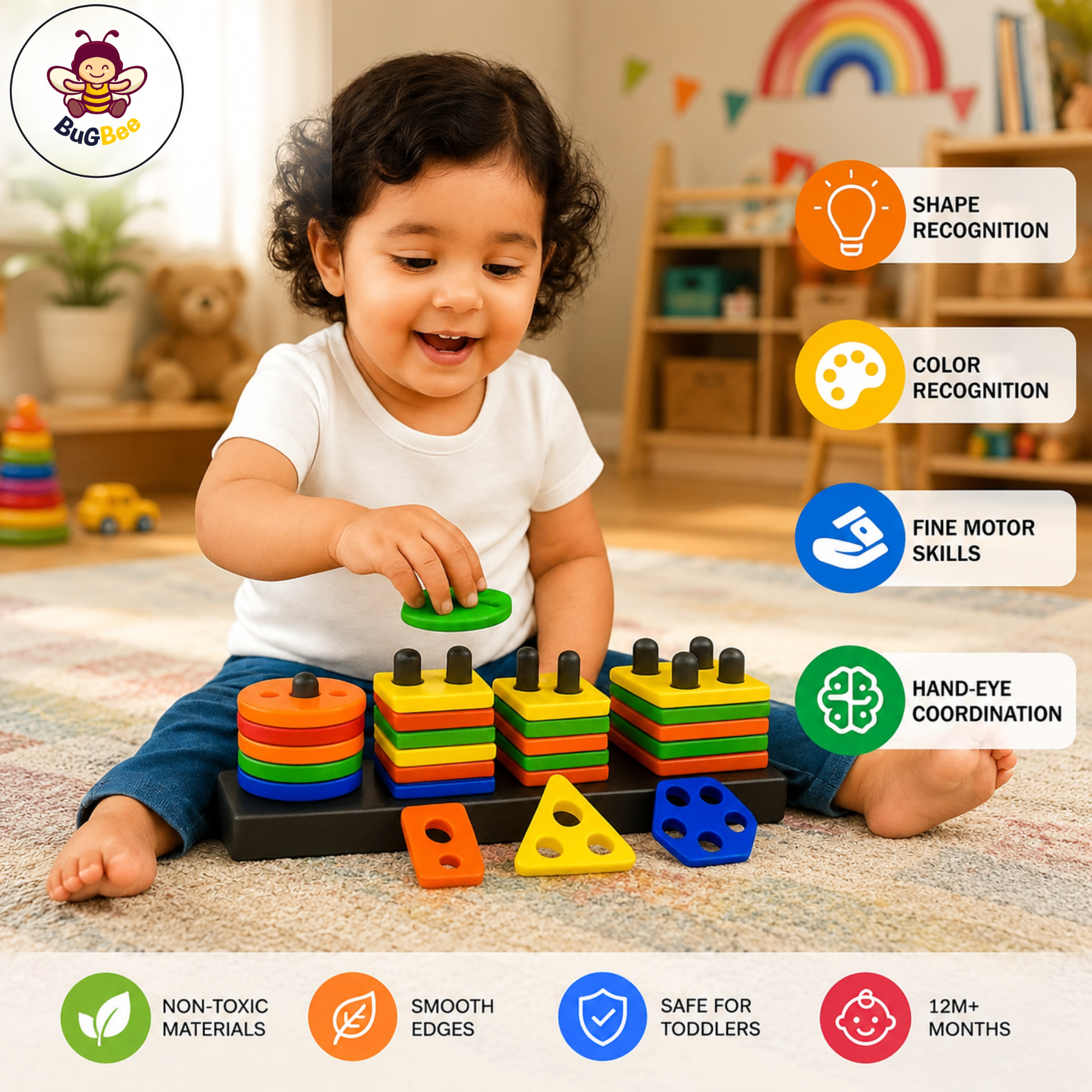
Why STEM Toys Are Popular for Ages 3–6
Children between three and six are naturally curious.
They ask questions.
They take things apart.
They build things.
They repeat activities again and again.
STEM toys match these natural behaviours.
Instead of giving children instructions for every step, many STEM toys allow them to explore independently and learn through trial and error.
That freedom is often what keeps children interested.
What Skills Can STEM Toys Help Children Practise?
STEM toys can create opportunities for children to practise many different skills.
Problem Solving
Many STEM toys encourage children to think about what to do next.
A puzzle asks them to find where pieces belong.
A building set asks them to decide how pieces connect.
A maze asks them to find a path.
Fine Motor Skills
Fine motor skills involve small hand and finger movements.
Activities such as:
-
Placing pegs
-
Picking up blocks
-
Connecting pieces
-
Sorting objects
-
Tracing shapes
allow children to practise these movements while playing.
Hand-Eye Coordination
When children place a puzzle piece into the correct space or stack blocks on top of each other, they use their eyes and hands together.
Many STEM toys naturally involve these actions.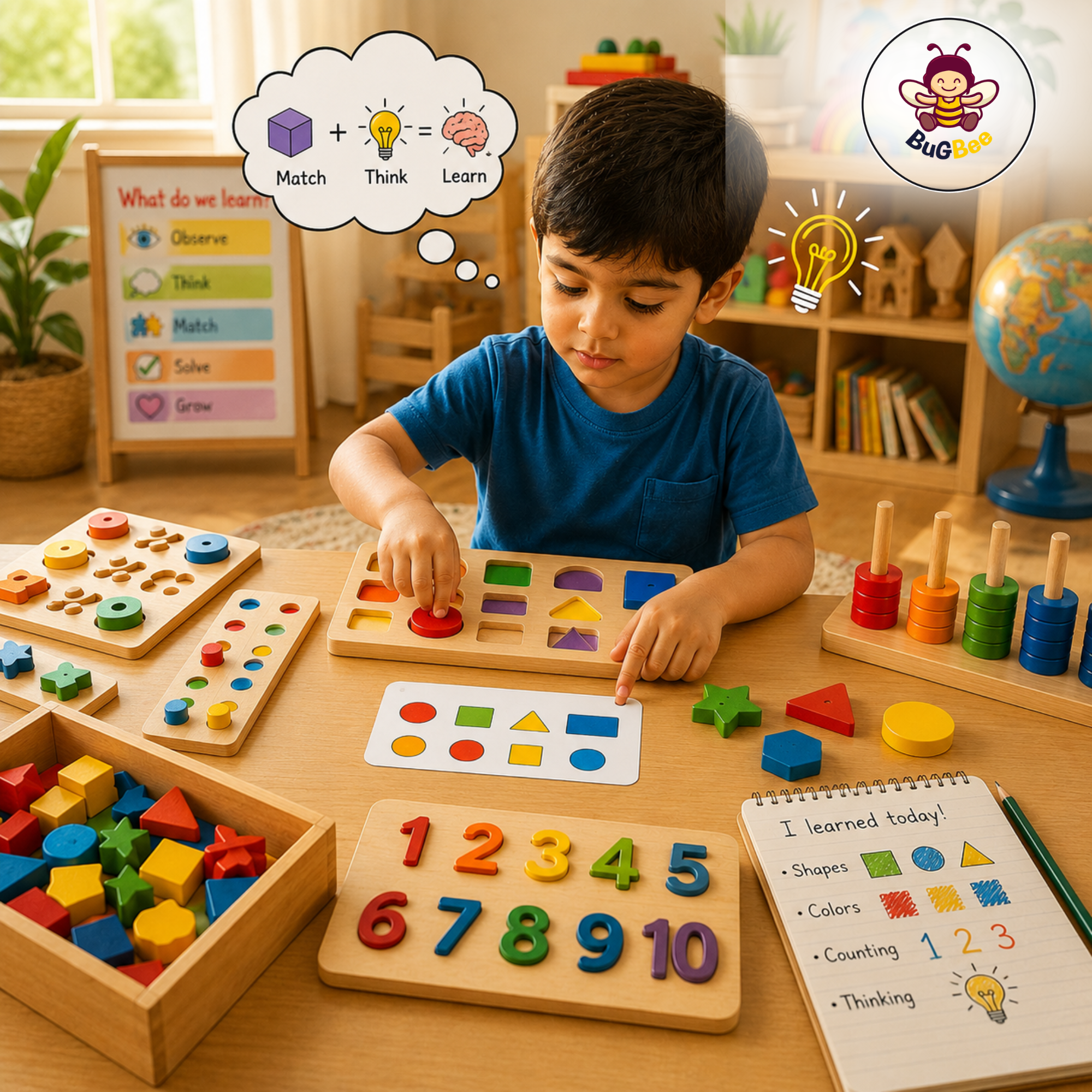
Early Maths Skills
Maths for young children does not always mean numbers on paper.
Children begin learning maths concepts when they:
-
Sort colours
-
Compare sizes
-
Count objects
-
Build patterns
-
Match shapes
Simple play activities can introduce these ideas naturally.
Observation and Curiosity
Many STEM activities involve noticing details.
Children might compare shapes, observe how objects move, or discover what happens when they change something.
This curiosity is an important part of learning.
Best STEM Toys for 3-Year-Olds
Three-year-olds are still learning through simple hands-on experiences.
The best STEM toys at this age are easy to understand and safe to use.
Good options include:
-
Shape sorters
-
Large-piece puzzles
-
Stacking toys
-
Peg boards
-
Wooden blocks
-
Colour matching activities
-
Simple construction toys
At this age, repetition is normal.
Children often enjoy doing the same activity many times.
Best STEM Toys for 4-Year-Olds
Four-year-olds are becoming more confident problem-solvers.
They often enjoy activities that involve building, sorting, matching, and experimenting.
Popular options include:
-
Building blocks
-
Magnetic construction toys
-
Pattern games
-
Wooden puzzles
-
Matching activities
-
Counting toys
-
Beginner engineering sets
Children may also start asking questions about how things work.
This is a good age to encourage exploration through play.
Best STEM Toys for 5-Year-Olds
Many five-year-olds enjoy challenges that require more thinking.
They may enjoy:
-
Building sets
-
Marble runs
-
Number games
-
Memory games
-
Construction toys
-
Logic puzzles
-
Pattern-building activities
Building and construction toys are frequently recommended because they allow children to test ideas, make changes, and create something new each time they play.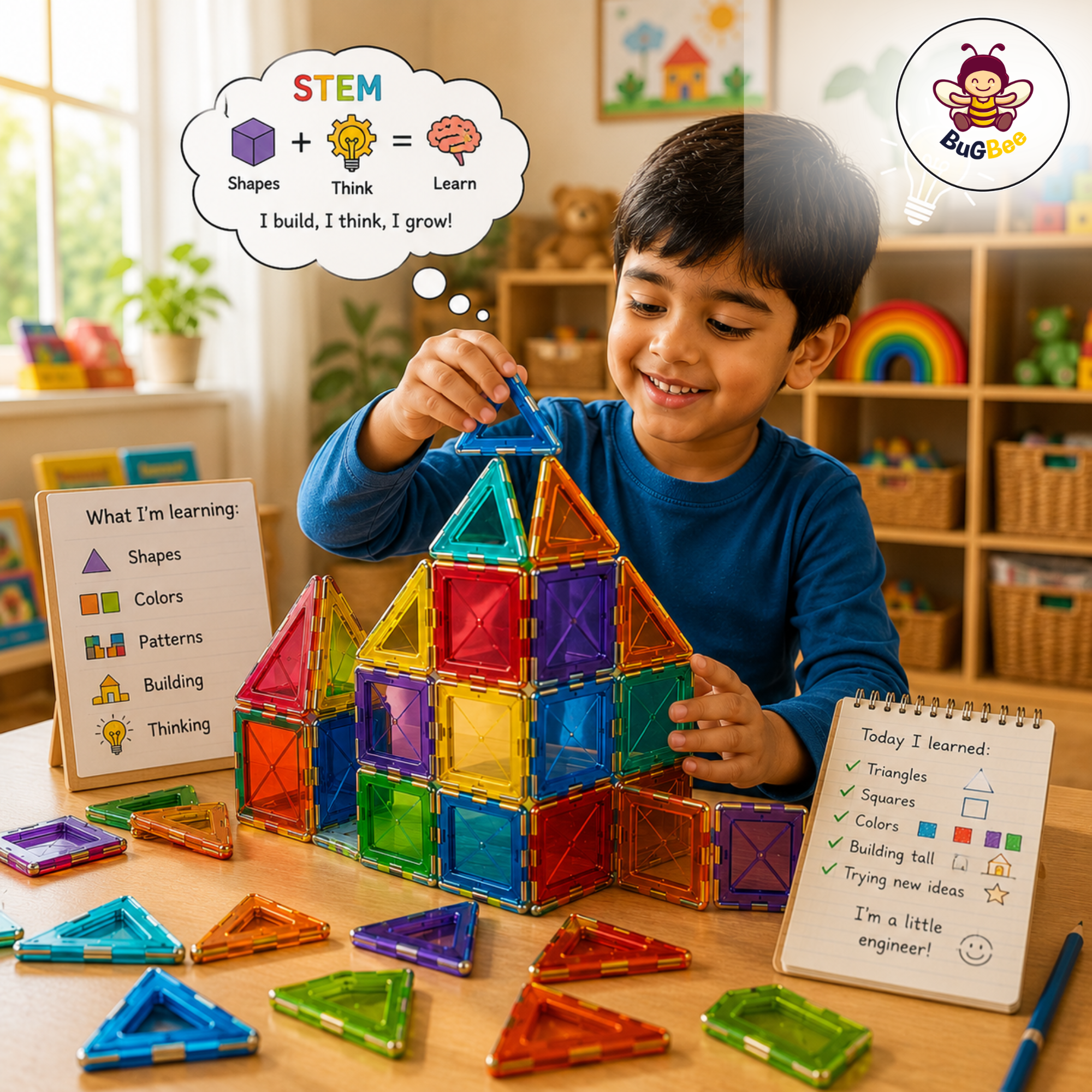
Best STEM Toys for 6-Year-Olds
Six-year-olds often enjoy activities with multiple steps and bigger challenges.
Parents can consider:
-
Advanced building toys
-
Brain games
-
Science activity kits
-
Construction sets
-
Logic puzzles
-
Engineering-style building toys
-
Beginner experiment kits
The best choice depends on the child.
Some children love building.
Others prefer puzzles or science activities.
Types of STEM Toys Worth Considering
Building Blocks
Building blocks remain one of the most recommended STEM toys for young children.
Children can build towers, bridges, houses, roads, and anything else they imagine.
Blocks encourage creativity, problem-solving, and spatial thinking.
Wooden Puzzles
Puzzles encourage children to compare shapes, identify patterns, and find solutions.
Start with simple puzzles and gradually increase the difficulty.
Peg Boards
Peg boards allow children to sort colours, create patterns, count pieces, and practise hand movements.
They are simple toys that can be used in many different ways.
Magnetic Construction Toys
Magnetic building toys are popular because children can easily connect and rearrange pieces.
Many children enjoy experimenting with different structures.
Marble Runs
Marble runs encourage children to build pathways and test how objects move.
Children often enjoy changing the design and seeing different results.
Matching and Pattern Games
These games encourage observation, comparison, and memory skills.
They are easy to introduce and can be adapted for different ages.
Do STEM Toys Need Screens?
Not at all.
Many of the most effective STEM toys for preschool children do not use screens.
Building toys, blocks, puzzles, magnetic tiles, peg boards, and sorting games remain some of the most popular options because children can physically interact with them.
For children between three and six years old, hands-on play is often more engaging than complicated technology.
How to Choose the Right STEM Toy
Choose Based on Age
Always check the recommended age range.
A toy that is too advanced may frustrate a child.
A toy that is too simple may not hold their attention.
Follow the Child's Interests
Some children enjoy building.
Others love animals.
Some enjoy counting.
Others prefer creative activities.
A toy is more likely to be used when it matches the child's interests.
Look for Open-Ended Play
Open-ended toys can be used in different ways.
For example, blocks can become a tower one day and a bridge the next.
These toys often remain interesting for longer.
Keep Safety First
Check:
-
Recommended age
-
Small parts
-
Materials
-
Product instructions
Safety should always be the first consideration.
Parents Can Make STEM Play More Interesting
You do not need a special lesson plan.
Simple questions can make play more engaging.
Try asking:
-
What do you think will happen?
-
Can you build it taller?
-
Which piece fits here?
-
How many blocks did you use?
-
What happens if we change this part?
The purpose is not to test the child.
The purpose is to encourage exploration.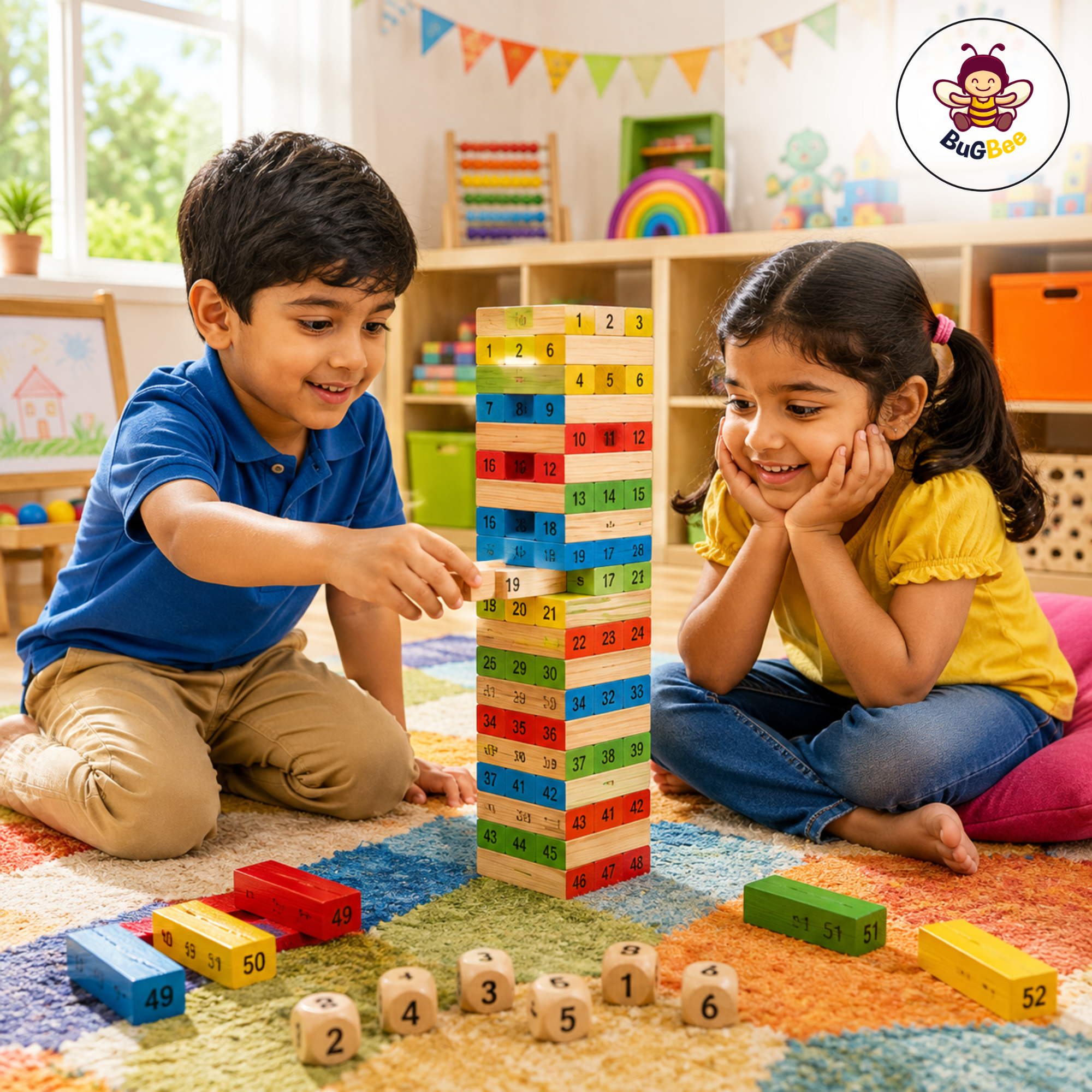
STEM Learning Can Be Simple
Many parents think STEM learning requires expensive kits or complicated activities.
In reality, some of the most useful STEM toys are simple building toys, puzzles, peg boards, matching games, and construction activities.
Children learn when they build, test, compare, observe, and try again.
That is what STEM play is really about.
Find STEM Toys for Kids at BuGBee Toys in Bangalore.
At 205/A, 55th Cross Rd, opposite to ABC Park, 4th Block, Rajajinagar, Bengaluru, Karnataka 560010
If you are looking for STEM toys for children aged 3–6 years, BuGBee Toys offers a range of hands-on educational toys designed for different age groups.
Parents can explore:
-
Wooden puzzles
-
Building toys
-
Montessori toys
-
Peg boards
-
Tracing boards
-
Flash cards
-
Activity toys
-
Brain games
-
Educational games
Choosing toys in person can help you understand the size, difficulty level, and type of activity before buying.
Final Thoughts
The best STEM toys for children aged three to six are often the simplest.
A puzzle can become a challenge.
Blocks can become a bridge.
A peg board can become a counting game.
A construction toy can become a new invention every day.
The right toy does not need flashing lights or complicated instructions.
It simply needs to give children something interesting to build, explore, test, and enjoy.
When children are engaged in play, learning often follows naturally.