


SKILL GUIDE · FINE MOTOR SKILLS
Toys for Fine Motor Skills
"Builds fine motor skills" appears on nearly every toy box for children under 5, which makes the phrase almost meaningless by the time you're actually choosing between two options. Fine motor skill isn't one single thing — it's a bundle of separate abilities, and a toy that's excellent for one of them can do almost nothing for another. This guide breaks down what fine motor skill actually covers and matches each part of it to toy types that genuinely build it.
The short answer
Fine motor skill is made up of several distinct abilities — grip strength, pincer precision, wrist rotation, bilateral coordination, and hand-eye coordination — and different toys target different ones. Peg boards and shape sorters build grip and hand-eye coordination. Puzzles and small object play build pincer precision. Tracing boards build the specific control needed for later writing. Choosing based on which sub-skill your child needs next, rather than the general label, gets much better results than picking anything marked "fine motor" on the shelf.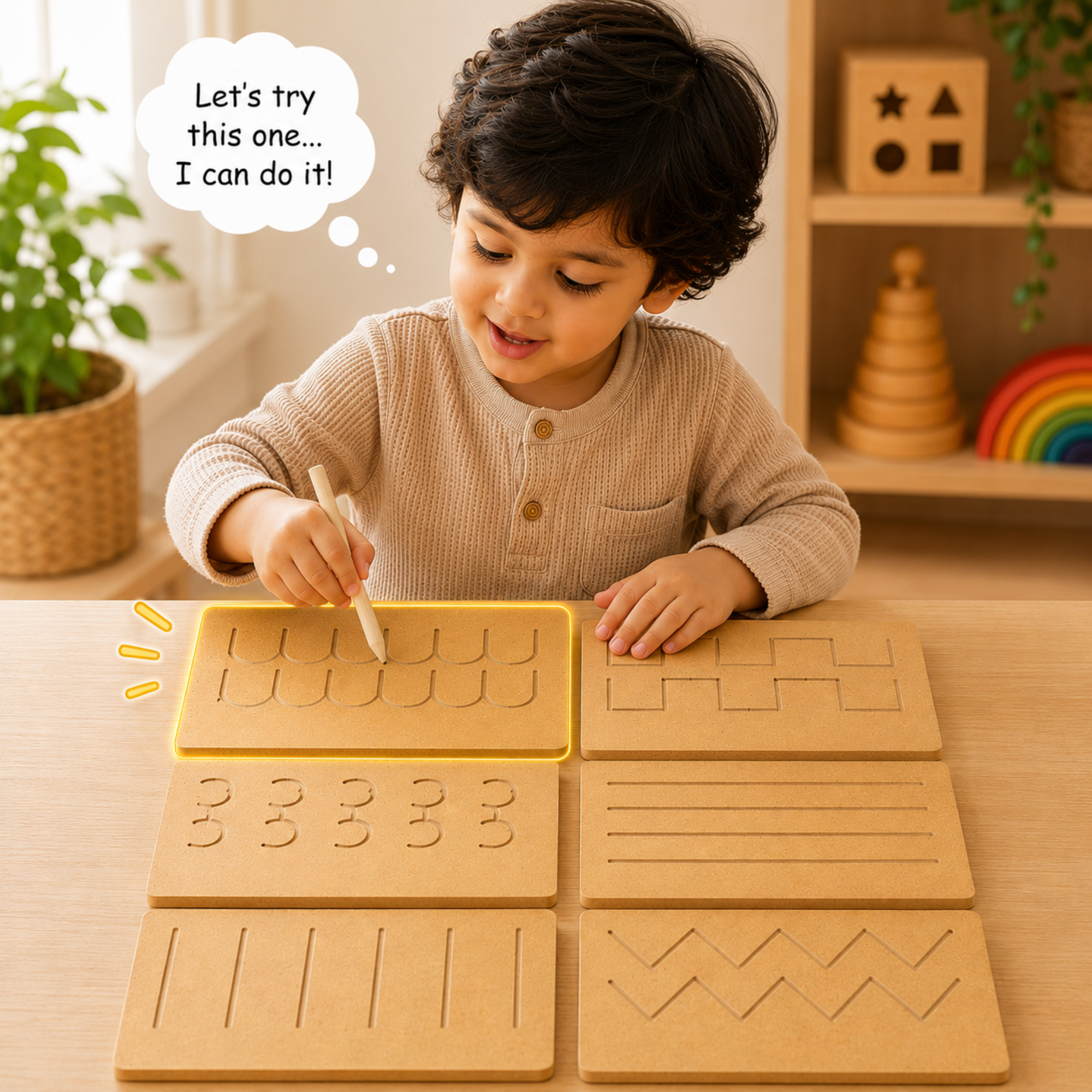
The five sub-skills hiding inside "fine motor skills"
| Sub-skill | What it means | Toys that build it |
|---|---|---|
| Grip strength | The basic strength to hold and squeeze an object | Large pegs, chunky stacking rings, thick crayons |
| Pincer grip | Precisely picking up small objects with thumb and forefinger | Small peg boards, puzzle knobs, threading beads |
| Wrist rotation | Turning an object in the hand to orient it correctly | Shape sorters, screw-and-bolt toys, jar-lid style toys |
| Bilateral coordination | Using both hands together, often doing different things | Puzzles (one hand steadies, one hand places), building sets, lacing toys |
| Hand-eye coordination | Directing hand movement based on what the eyes see | Shape sorters, tracing boards, target-based posting toys |
Most children need all five eventually, but not all at once, and not in the same order. A toy chosen for the sub-skill your child is actually working on right now will get far more genuine use than one chosen for the general "fine motor" label.
How this maps to age
| Age range | Sub-skill usually developing first | See our age guide |
|---|---|---|
| 12–18 months | Grip strength, early hand-eye coordination | Toys for 1-year-olds |
| 18–36 months | Pincer grip, wrist rotation | Toys for 2-year-olds |
| 3–4 years | Bilateral coordination, refined hand-eye coordination | Toys for 3-year-olds |
| 4–6 years | Pre-writing precision, sustained fine control | Toys for preschoolers |
How to tell if a toy is genuinely building the skill
- ☐ The child's hand is doing the work, not a button or lever doing it for them.
- ☐ There's a small but real challenge — not so easy it's automatic, not so hard it's constant failure.
- ☐ The same action can be repeated multiple times without the toy "ending" after one use.
- ☐ The child's grip or hand position visibly adjusts to complete the task, rather than staying static.
A toy that fails most of these — a single push-button toy, for example — may still be enjoyable, but it isn't doing much for fine motor development specifically, regardless of what the packaging claims.
Two of the most common fine motor toy choices, compared
Shape sorters and puzzles are the two most frequently recommended fine motor toys, and they target slightly different sub-skills — a sorter leans toward wrist rotation and hand-eye coordination, while a puzzle leans toward pincer grip and bilateral coordination. Our full shape sorter vs puzzle comparison breaks this down further if you're deciding between the two for a specific child.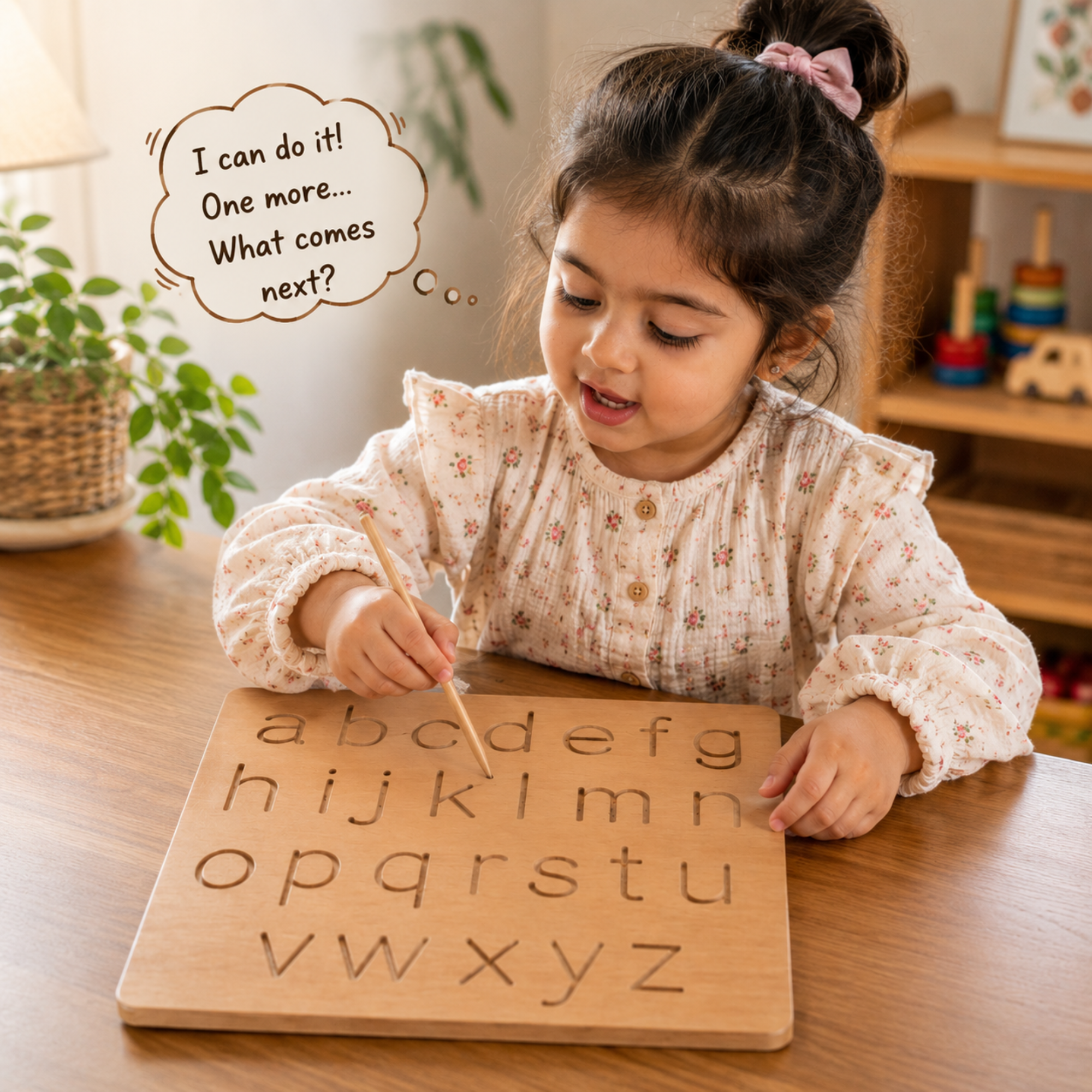
Extending a fine motor toy you already own
A single peg board or shape sorter can support several sub-skills over time simply by changing how it's used — slower, more deliberate posting for grip control; sorting by size for bilateral coordination; a feel-and-guess version for hand-eye refinement. Our guide on getting more out of one toy covers this in detail and is one of the most useful companions to this guide.
Common mistakes when choosing fine motor toys
Buying anything labelled "fine motor" without checking the sub-skill
Two toys can carry the same label while targeting completely different hand abilities. Match the toy to the specific skill your child needs next.
Choosing electronic toys that do most of the physical work
A toy where a light or sound reacts to a light touch doesn't require much genuine hand control. Toys that need real grip, rotation or precision do more for this specific goal.
Skipping grip-strength toys and going straight to precision toys
Pincer grip toys are harder if basic grip strength hasn't developed first. If a puzzle or peg board feels consistently too hard, a simpler grip-strength toy may be the more useful next step.
Assuming one fine motor toy covers every sub-skill
Most single toys are strong in one or two sub-skills, not all five. A small, varied set covers more ground than one "do everything" toy.
Not rotating fine motor toys once a skill is mastered
Once a specific sub-skill is comfortable, the same toy stops offering much challenge. Our toy rotation planner helps keep a fine motor set moving forward rather than staying static.
Fine motor play while travelling
Storing a fine motor toy set at home
Fine motor toys are usually compact and stack well, which makes them a good fit for limited storage. Our small apartment storage guide covers exactly how to keep a set like this organised without needing much space.
How these recommendations are tested
Fine motor toy recommendations here follow the same evaluation approach as every other category at BuGBee, described in our Toy Lab methodology — observed through real, repeated play rather than assumed from a product description.
Buying for a classroom or occupational therapy setting
If you're stocking a preschool activity corner or supporting a therapy setting with multiple children using the same toys, durability and consistent sizing across units matter more than usual. See our bulk sourcing guide for what to check before ordering multiple units.
When should you ask for help choosing?
Ask for help if you're not sure which sub-skill your child needs next, if a current fine motor toy has stopped offering a real challenge, or if you're buying for a child with different needs than your own. Share the exact age, current grip and what toys they've already mastered — this narrows the choice faster than a general "fine motor toys" search.
Not sure which fine motor toy fits your child?
BuGBee Toys is an educational toy store in Rajajinagar, Bengaluru, offering peg boards, shape sorters, wooden puzzles, lacing toys and other fine motor activity toys. Call or WhatsApp +91 9986003534 and share your child's age and current grip stage, or visit the store in Rajajinagar to see options in person. See our local guide to BuGBee Toys in Bangalore for address and visiting details.
Frequently asked questions
What exactly counts as a fine motor skills toy?
Any toy that requires deliberate hand and finger control to complete a task — grip, pincer precision, wrist rotation, using both hands together, or coordinating hand movement with what the eyes see.
What's the difference between grip strength and pincer grip?
Grip strength is the basic ability to hold and squeeze an object with the whole hand. Pincer grip is the more precise skill of picking up a small object using just the thumb and forefinger, which typically develops later.
Are electronic toys with buttons good for fine motor skills?
Not particularly. A light touch on a button requires far less hand control than posting a shape, threading a bead, or fitting a puzzle piece.
Which fine motor sub-skill should I focus on first?
Grip strength usually comes first, followed by pincer grip and wrist rotation, with bilateral coordination and refined hand-eye coordination developing over the following years. Follow your child's current comfort level rather than a fixed order.
How do I know if a fine motor toy has become too easy?
If your child completes it instantly without any visible effort or hand adjustment, it's likely mastered for that sub-skill. Consider extending it with a harder variation, or introducing the next sub-skill in the sequence.
Do fine motor toys help with handwriting later on?
Toys that build pincer grip, hand-eye coordination and sustained fine control — tracing boards especially — support the same hand skills used in early writing, though writing itself involves additional skills developed separately.