


Reducing Screen Time for Toddlers
Most advice about screen time focuses on why it matters, not on the actual moment a phone gets handed over. It is rarely a planned decision. It usually happens during a specific trigger: dinner needs to be cooked, a work call has started, or a toddler is bored in a waiting room and a screen is the fastest fix available. This guide is built around those exact moments, with a realistic alternative for each one, rather than a general reminder that screens should be limited.
The short answer
Screens usually get reached for in one of three situations: a parent needs a stretch of uninterrupted time, a toddler is bored with nothing else immediately available, or a family is travelling or waiting somewhere without the usual toys nearby. Preparing a familiar, self directed activity in advance for each of these three situations is far more effective than a general intention to cut down, since the decision has already been made before the moment arrives.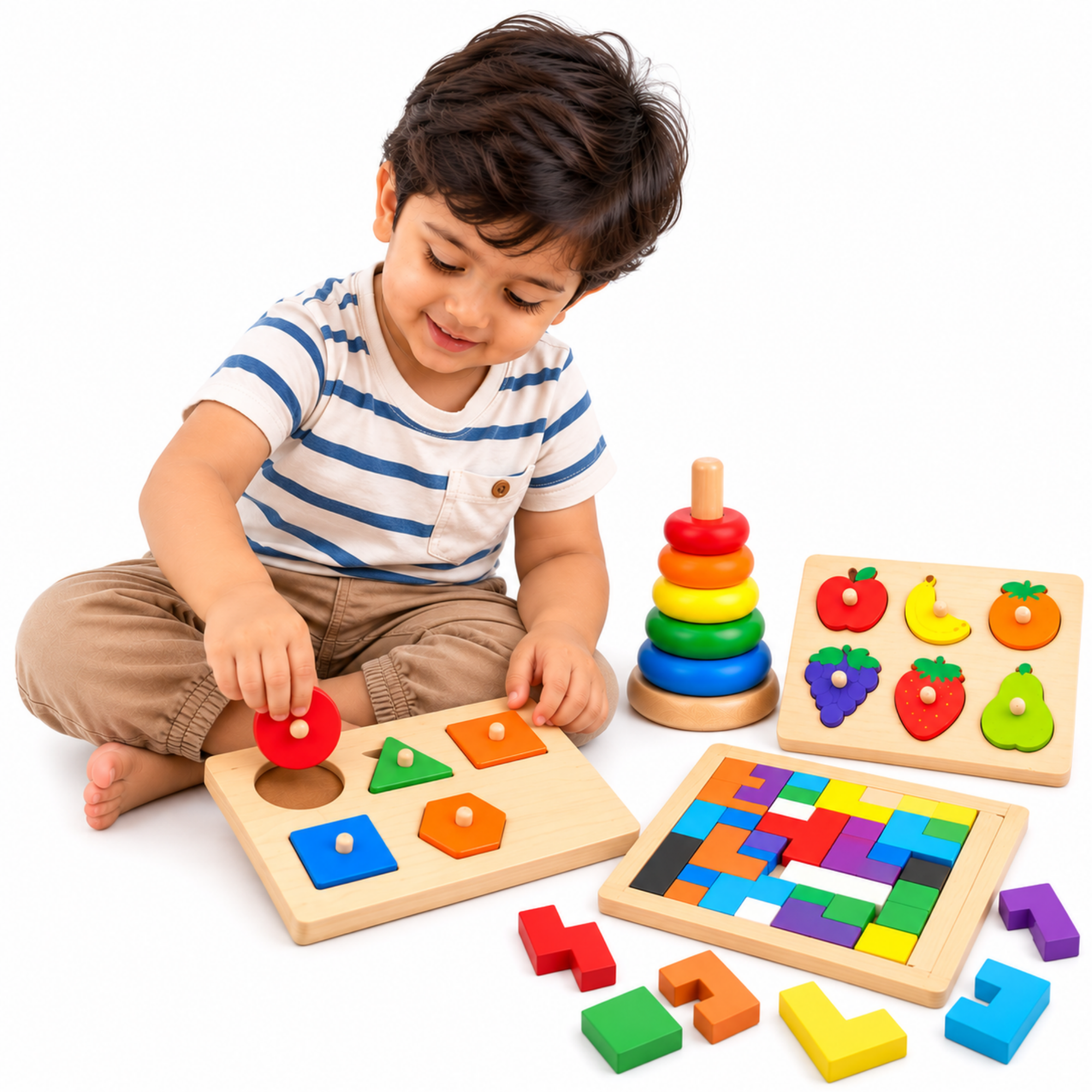
The three moments screens usually get reached for
| Moment | What is actually needed | Better prepared alternative |
|---|---|---|
| A parent needs uninterrupted time | Ten to twenty minutes of a child occupied without supervision | A familiar, self correcting toy set up before the task begins |
| A toddler is bored between activities | A quick, low effort option that does not need a parent to start it | A small rotation set kept visible and easy to reach |
| Travel or a waiting room | Something quiet, contained, and easy to carry | A small travel kit prepared before leaving the house |
Why a familiar toy beats a new one in the moment
A brand new toy usually needs a demonstration, and a demonstration needs the exact attention a parent is trying to free up. A toy the child already knows how to use, and can start without help, is what actually buys the time a screen would otherwise provide. This is the same idea covered in more depth in our independent play guide, which explains what makes a toy genuinely usable without supervision rather than just labelled that way.
Preparing for the three moments in advance
- Before you need to cook or take a call: set up a familiar activity two or three minutes before the moment actually arrives, rather than reaching for a screen once the need is already urgent.
- For daytime boredom: keep a small, rotated set of eight to twelve toys genuinely reachable, so a bored child has an immediate option without asking for help.
- Before leaving the house: pack a small activity kit as part of your normal routine, the same way you would pack a water bottle, so it is ready without extra thought at the moment it is needed.
Handling the pushback when a screen is removed
A child who is used to a screen in a specific moment will often push back the first several times it is replaced with something else, and that is a normal part of the adjustment rather than a sign the approach is failing. Giving a short warning before the change happens, rather than stopping suddenly, tends to reduce the intensity of the reaction. Having the replacement activity already visible, rather than searching for one after the screen is removed, also helps, since an empty moment is often what triggers the strongest protest.
Building a small rotation set for daytime boredom
A rotated set of eight to twelve toys, changed every one to two weeks, tends to hold attention far better than a large pile left out permanently, since each item feels fresher when the total number visible is smaller. Our toy rotation planner covers exactly how to set this system up, and it pairs directly with the boredom moment described above.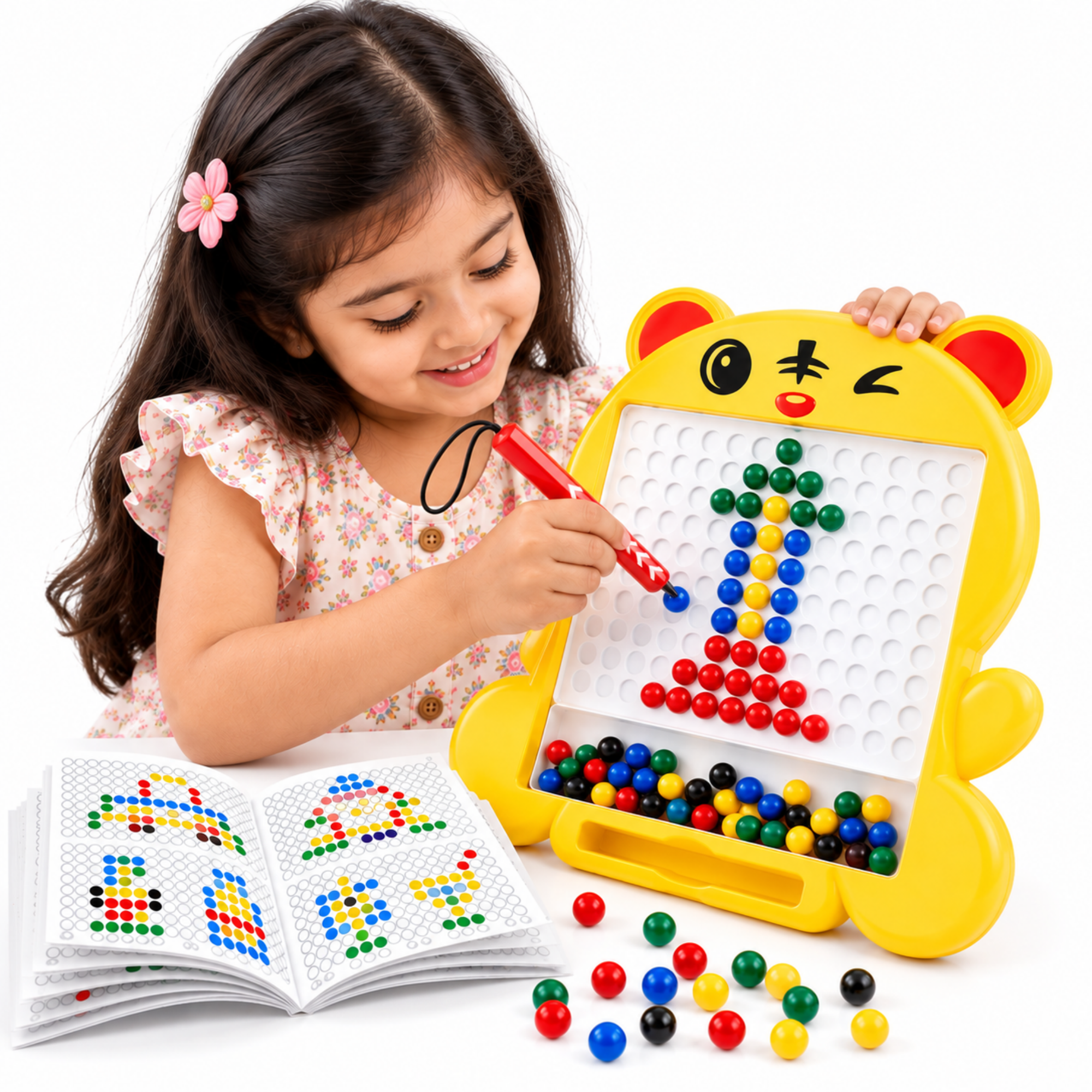
Making one toy last longer during a busy week
Buying new toys every time interest fades is not necessary, and often is not realistic either. Our guide on getting more out of one toy shows how a single peg board, sorter, or puzzle can be extended through several stages of play, which keeps the prepared alternative genuinely interesting rather than something a child quickly refuses.
A travel kit for the third moment
Common mistakes when trying to reduce screen time
Deciding to cut screens without preparing a replacement
Removing a screen without something ready to offer instead usually leads to reaching for it again the next time the same moment arrives.
Offering a new toy at the exact moment a screen would normally appear
A new toy needs supervision to introduce, which defeats the purpose if the goal was uninterrupted time. Save new toys for a separate, supervised moment.
Expecting instant success on the first attempt
A toddler used to a screen in a given moment often needs several repetitions of the new routine before it becomes a genuine habit.
Treating every screen use as equally concerning
Not every moment needs the same level of concern. A short video during a long flight is a different situation from a screen used every single evening to avoid a bedtime routine.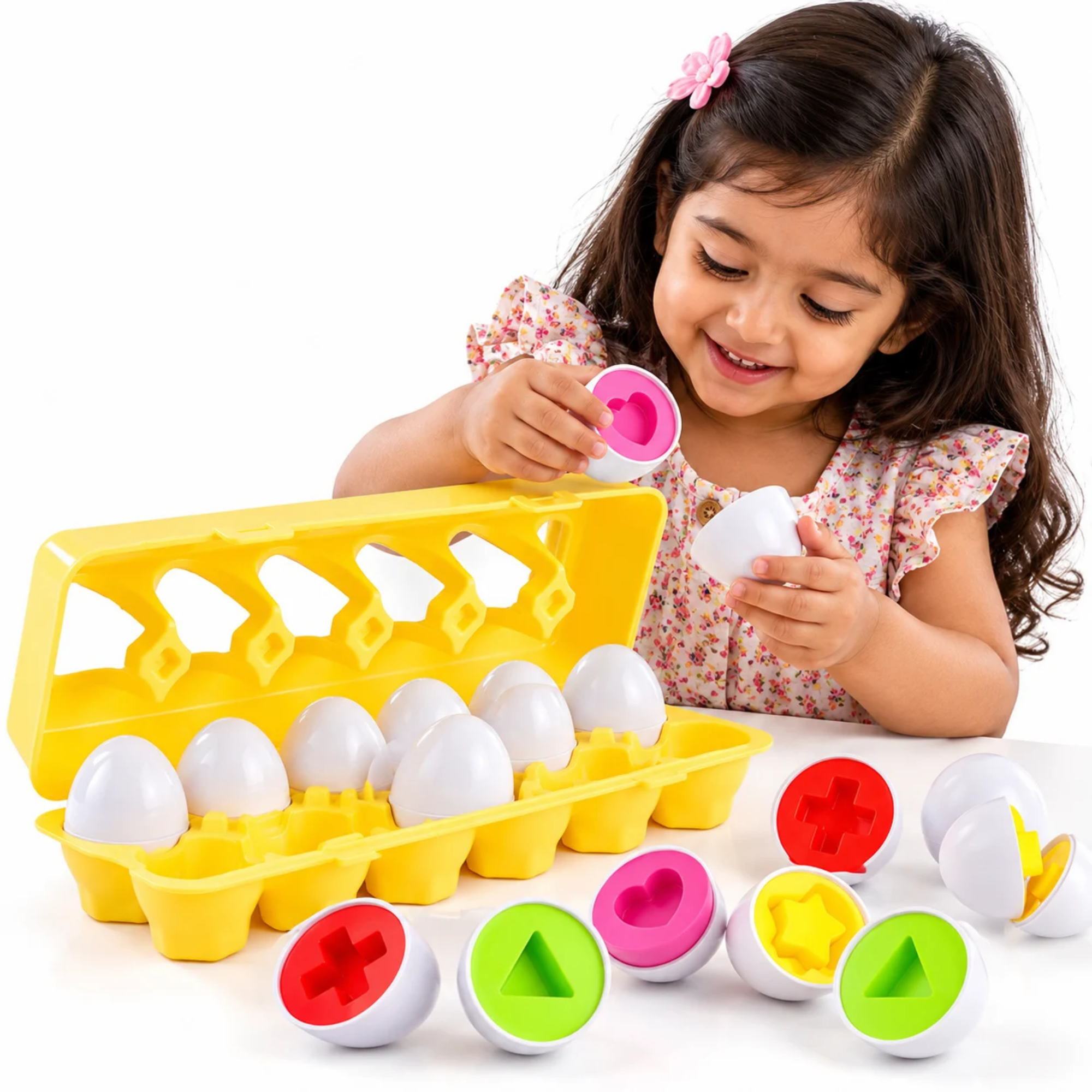
Keeping too many toys out at once "just in case"
A crowded shelf is often less effective than a small, rotated set, since too many options can overwhelm rather than help a bored child choose something.
Choosing toys that genuinely hold up in these moments
Not every toy marketed as a good screen alternative actually functions that way once tested in a real moment. Our guide on toddlers losing interest quickly and shape sorter versus puzzle comparison both help identify toys with real staying power rather than a brief novelty appeal.
How BuGBee chooses toys suited to this goal
Independent use and repeat play value are two of the criteria in our Toy Lab methodology, both directly relevant to whether a toy genuinely functions as a screen alternative rather than only being marketed as one.
Setting this up for a classroom or daycare
The same three moment framework applies in a group setting, where a teacher often needs a similar stretch of uninterrupted time to manage a transition or a small group activity. See our bulk sourcing guide for setting up multiple self directed activity stations at once.
When should you ask for help choosing?
Ask for help if a toy you expected to work as a screen alternative keeps needing your involvement anyway, or if you are not sure which activity fits a specific recurring moment in your day. Share your child's age and the moment you are trying to solve for the most useful answer.
Looking for a genuine screen alternative?
BuGBee Toys is an educational toy store in Rajajinagar, Bengaluru, offering shape sorters, puzzles, peg boards and other toys chosen for real independent use. Call or WhatsApp +91 9986003534 and share your child's age and the specific moment you are trying to solve, or visit the store in Rajajinagar to see options in person.
Frequently asked questions
How do I reduce screen time without a meltdown every time?
Give a short warning before the screen goes off rather than stopping suddenly, and have the next activity already visible and ready so there is an immediate next step rather than an empty moment.
What can I give my toddler instead of a screen while I cook?
A familiar, self directed toy set up nearby, such as a shape sorter or peg board, tends to work better than something new, since a new toy often needs supervision the moment does not allow for.
Is it realistic to remove screens completely?
For most families, reducing specific moments rather than removing screens entirely is a more sustainable goal, since some situations genuinely benefit from a short screen based break.
Why does my toddler ask for a screen even when toys are available?
A screen requires no setup and no risk of getting something wrong, which can make it the easiest option in the moment even when a toy is nearby. Reducing the effort needed to start a toy activity helps close this gap.
How long can a toddler realistically play without a screen?
A few minutes for a younger toddler, extending toward fifteen to thirty minutes by preschool age with a well matched, familiar activity.
Should older siblings' screen habits be treated the same way?
Expectations reasonably differ by age, though a consistent household approach to specific moments, such as mealtimes or car rides, tends to work better than different rules applied inconsistently.