


Toys for Independent Play
A toy marketed for "independent play" often turns out to need an adult anyway — resetting a piece, confirming whether an answer is right, or restarting an activity that only runs once. Genuine independent play depends on specific design features, not a label on the box. This guide covers what actually makes a toy work without you in the room, and how to build that up gradually rather than expecting it all at once.
The short answer
A toy supports genuine independent play when it's self-correcting (the child can tell if they got it right without asking), needs no adult reset between uses, matches the current challenge level closely enough to avoid needing help, and is safe to handle without supervision at that age. Shape sorters, puzzles, peg boards and open-ended building sets tend to score well on most of these. Toys that need an adult to explain, judge, or restart each round usually don't hold up to real independent use, whatever the packaging claims.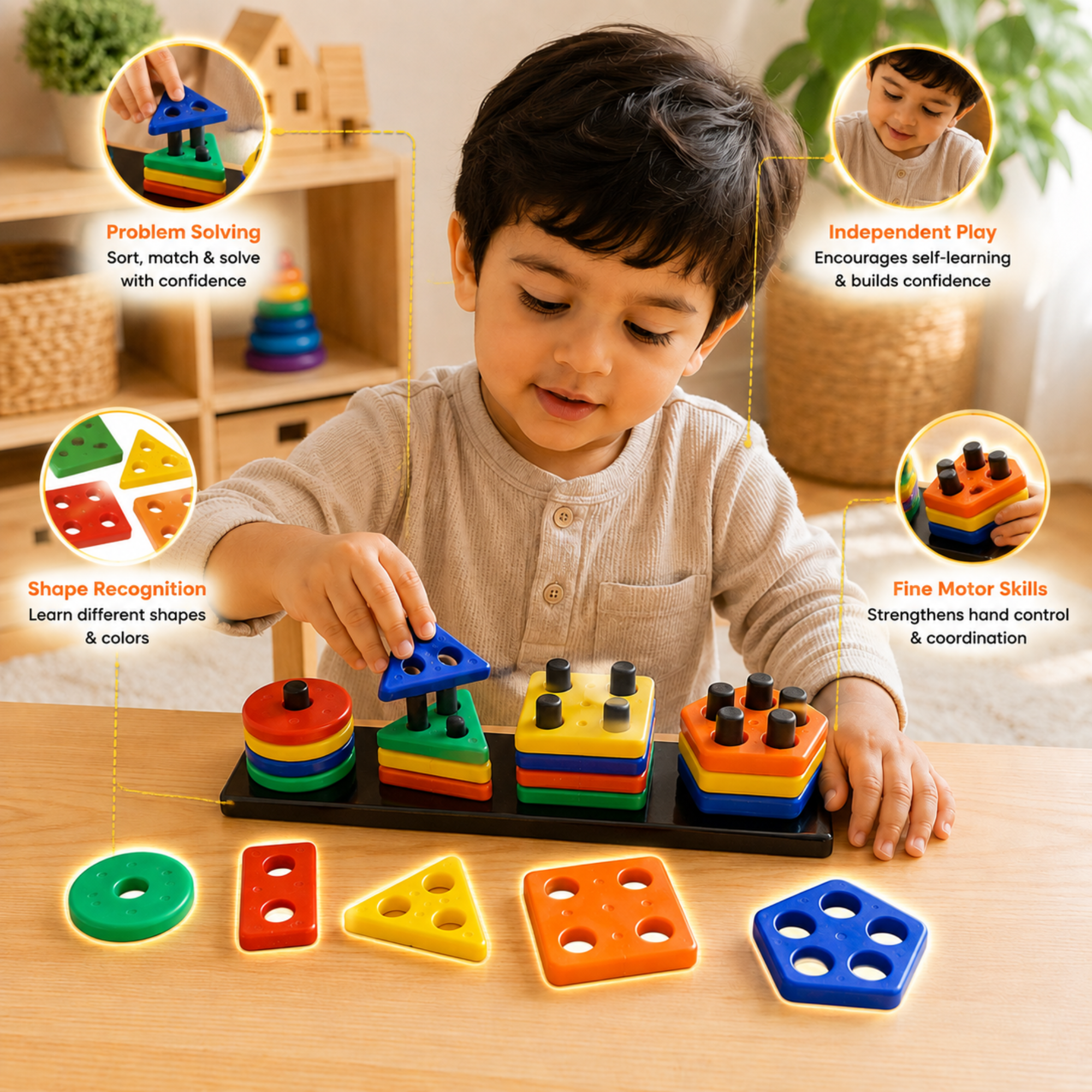
The four things a toy needs for genuine independent play
| Requirement | What it means | Toys that meet it well |
|---|---|---|
| Self-correcting | The toy itself shows whether an attempt worked, without needing an adult to confirm | Puzzles (a piece either fits or doesn't), shape sorters |
| No adult reset needed | The toy can be used again right away without someone rearranging it first | Peg boards, sorting trays, open-ended blocks |
| Matched challenge level | Difficult enough to be interesting, easy enough not to require help | Any toy chosen against current skill rather than age label alone |
| Safe without supervision | No parts or risks that require an adult present at all times for this specific child's age | Age-appropriate piece sizes, no electrical components needing supervision |
Self-correction is the one most parents overlook. A toy where a parent has to say "yes, that's right" every time isn't actually independent — the child is still relying on external feedback. A puzzle piece that simply doesn't fit when it's wrong gives that same feedback without anyone needing to be in the room.
How this maps to age
| Age range | Realistic independent play stretch | See our age guide |
|---|---|---|
| 1–2 years | A few minutes, often with a parent nearby but not directly involved | Toys for 1-year-olds |
| 2–3 years | 5–10 minutes with a familiar, self-correcting toy | Toys for 2-year-olds |
| 3–4 years | 10–15 minutes, especially with open-ended building or sorting | Toys for 3-year-olds |
| 4–6 years | 15–30 minutes with a genuinely engaging, appropriately challenging toy | Toys for preschoolers |
These are general expectations, not targets to push toward. A shorter independent stretch than shown here is completely normal, especially for a toy that's new.
Building up independent play gradually
- Demonstrate once, then step back slightly — stay in the room but stop directing the play.
- Increase physical distance gradually — move to another part of the same room, then eventually another room nearby.
- Start with short stretches — a few minutes of true independent play is a success, not a shortfall.
- Return before frustration builds — checking in just before a child would otherwise call out keeps the experience positive.
Independent play is a skill that builds over weeks, not something to expect fully formed the first time a new toy is introduced.
Why this matters for reducing screen time
A genuinely self-correcting, well-matched toy is one of the more reliable screen-free alternatives during the specific moments parents most want one — cooking, a work call, or needing ten uninterrupted minutes. A toy that constantly needs adult involvement doesn't solve that problem the way a screen might seem to, which is often why parents default back to a screen even after buying a "great" independent-play toy that didn't actually hold up alone.
Choosing between two common independent-play toys
Shape sorters and puzzles both tend to score well for independent play, but for slightly different reasons — a sorter is more forgiving and needs less setup, while a puzzle gives clearer self-correction. Our shape sorter vs puzzle comparison covers this distinction directly if you're deciding between the two.
Extending independent play from a toy already owned
A toy that's been mastered often loses independent-play value simply because it's stopped being a real challenge. Our guide on getting more out of one toy covers ways to keep a familiar peg board, sorter or puzzle interesting enough to hold solo attention rather than needing to be replaced.
Common mistakes with independent play
Expecting long stretches too early
A few minutes is a realistic, genuine success for a younger toddler. Expecting 20 minutes of solo play from a 15-month-old sets an unrealistic bar.
Choosing a toy that needs constant confirmation
If a child has to keep asking "is this right?", the toy isn't functioning independently even if it's technically being used alone.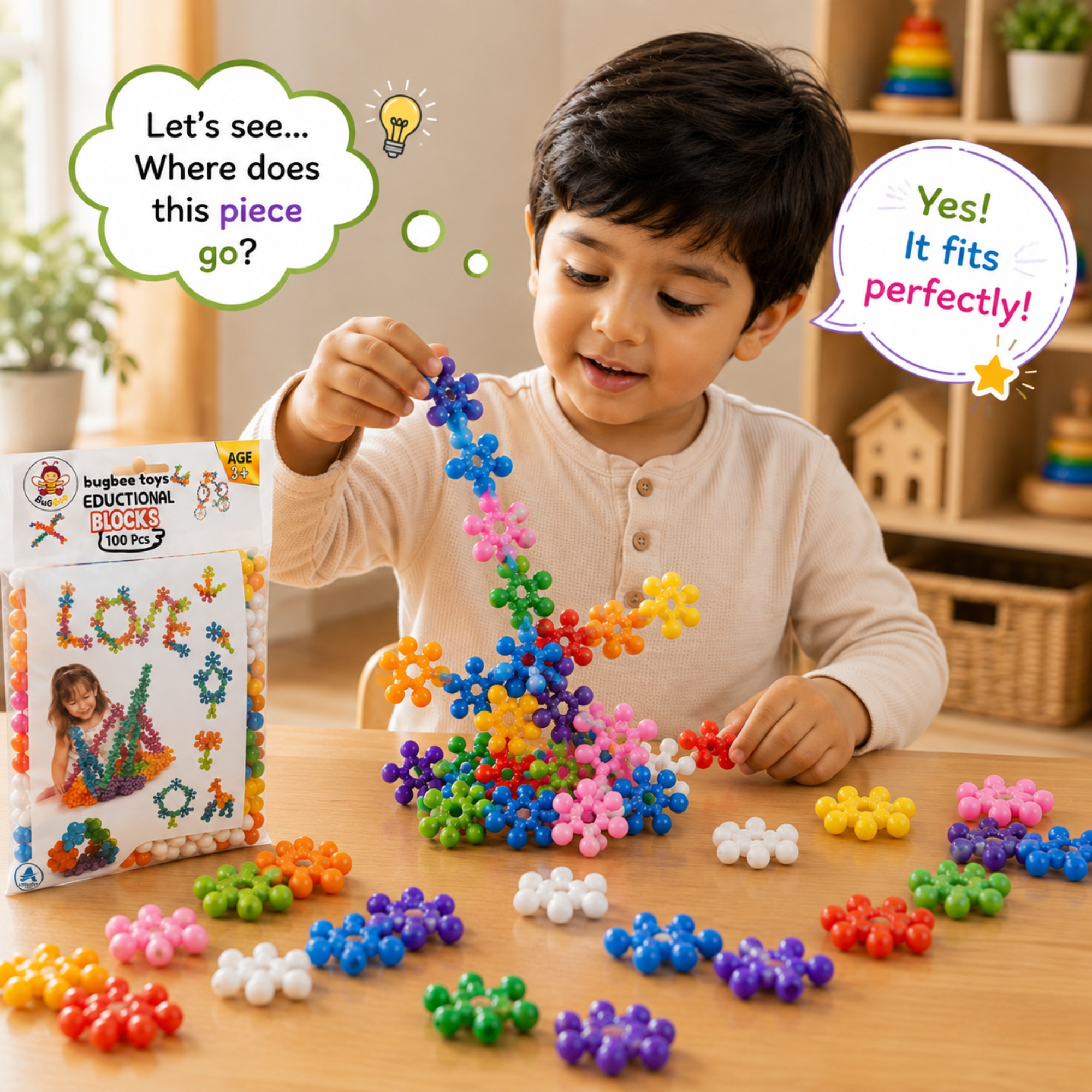
Leaving too suddenly with no gradual buildup
Jumping straight from constant supervision to "go play by yourself" often doesn't work well. A gradual step-back tends to succeed more reliably.
Interpreting a short attention span as a toy failure
A toy that holds attention for five minutes independently is doing its job, even if that feels short. Repeated five-minute stretches across a day add up to meaningful solo play time.
Keeping every toy out at once "in case none of them work alone"
A smaller, well-chosen set tends to hold independent attention better than a large, overwhelming pile. Our toy rotation planner covers how to keep a focused set without needing everything visible.
Independent play while travelling
Storing an independent-play toy set
Toys chosen for independent play tend to be compact and self-contained, which also makes them easy to store. Our small apartment storage guide covers practical storage for a set like this.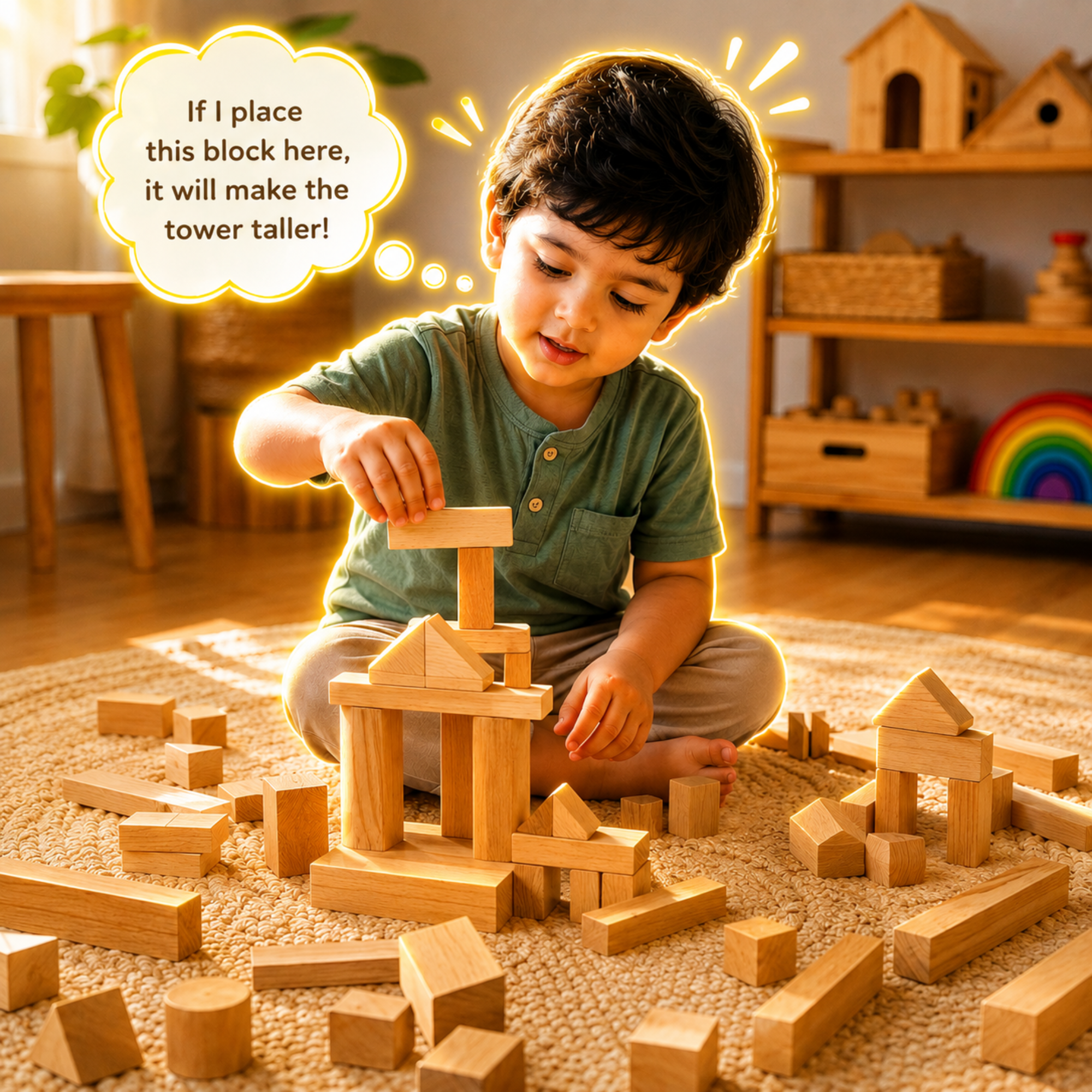
How these recommendations are tested
Independent-use scoring is one of the eight criteria in our Toy Lab methodology, based on how a toy actually performs when a child is left to use it alone, not just how it's described.
Balancing independent play with other skills
Independent play works well alongside the skills covered in our fine motor, early literacy, numeracy and problem-solving guides — a toy chosen well against one of those skills often turns out to support independent play too, since a well-matched challenge is naturally easier to sustain alone.
Buying for a classroom or in bulk
If you're stocking a classroom activity corner meant to occupy children with minimal supervision, self-correcting, low-reset toys are especially valuable. See our bulk sourcing guide for what to check before ordering multiple units.
When should you ask for help choosing?
Ask for help if a toy you expected to work independently keeps needing your involvement, or if you're not sure whether the challenge level is matched to your child. Share the exact age, how long they currently play alone, and what tends to interrupt it — this narrows the choice faster than a general "independent play toys" search.
Looking for a toy that actually holds up alone?
BuGBee Toys is an educational toy store in Rajajinagar, Bengaluru, offering shape sorters, puzzles, peg boards and other toys chosen for genuine self-directed play. Call or WhatsApp +91 9986003534 and share your child's age and how long they currently play alone, or visit the store in Rajajinagar to see options in person.
Frequently asked questions
What makes a toy good for independent play?
It needs to be self-correcting, require no adult reset between uses, match the child's current skill level closely, and be safe to use without supervision at that age.
How long should a toddler play independently?
A few minutes is realistic for a younger toddler, extending toward 15 to 30 minutes by preschool age with a well-matched toy. Shorter stretches are completely normal and still valuable.
Why does my child keep calling me over even with an "independent play" toy?
The toy may not be self-correcting — if a child needs confirmation that an answer is right, they're still relying on you even while holding the toy alone.
How do I build up independent play without it feeling sudden?
Step back gradually — stay in the room but stop directing, then increase distance over time, rather than leaving abruptly from full supervision.
Can independent play toys replace screen time?
A well-matched, self-correcting toy can fill the same practical gap a screen often does, but it works best alongside other strategies rather than as a single complete solution.
Is it a problem if my child only plays independently for a short time?
No, short, repeated stretches of genuine independent play across a day add up to meaningful solo play time, even if no single session is very long.