
Toys to Teach Numbers
A child who can recite "one, two, three, four, five" in perfect order isn't necessarily counting yet — they might be reciting a memorised sequence without connecting each number to an actual object. This distinction matters more than most "counting toy" descriptions suggest. This guide breaks early numeracy into its real components and matches each one to a toy that genuinely builds it, rather than anything that simply has numbers printed on it.
The short answer
Early numeracy is built from several distinct skills - rote counting, one-to-one correspondence, number recognition, and an early sense of quantity — and they don't all develop at the same time. Peg boards and counting toys build one-to-one correspondence, the actual link between a number and a physical object. Number cards and peg boards with numerals build recognition. Simple comparison games build a sense of "more" and "less" before formal addition is introduced. Choosing based on which piece your child is missing works better than any toy chosen for the word "counting" on the box alone.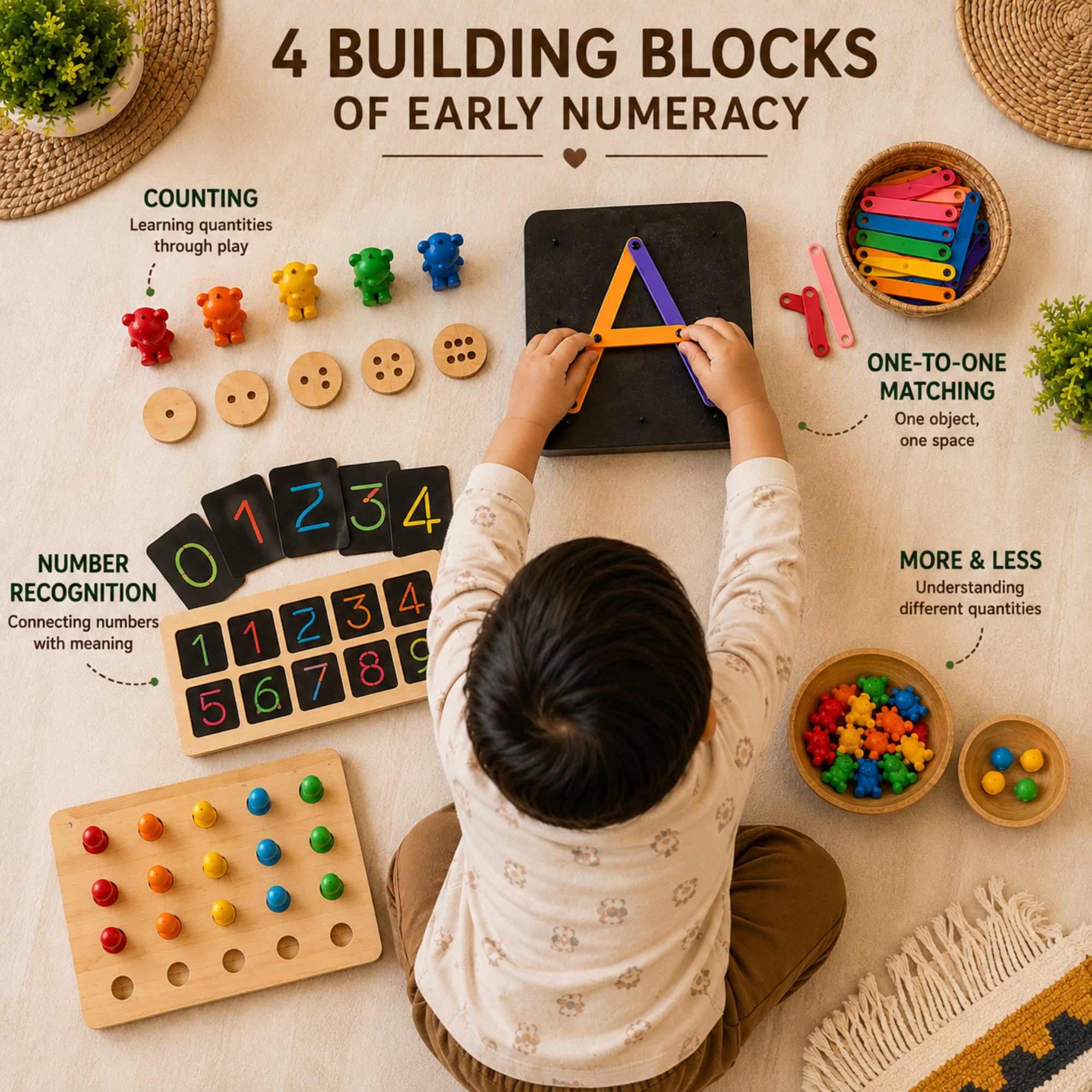
The four pieces of early numeracy
| Skill | What it means | Toys that build it |
|---|---|---|
| Rote counting | Reciting numbers in order, without necessarily connecting them to objects yet | Number songs, simple counting books, number peg boards used for repetition |
| One-to-one correspondence | Matching exactly one number word to exactly one object as it's counted | Peg boards, counting toys, simple posting toys counted aloud |
| Number recognition | Identifying written numerals by sight | Number flash cards, number matching puzzles, numbered peg boards |
| Quantity sense | Recognising which group has "more" or "fewer" without counting each one | Comparison games, sorting trays, simple grouping activities |
Rote counting is the skill most toys and songs target, and it's also the one that can most easily give a false impression of understanding — a child reciting "1, 2, 3, 4, 5" fluently may still point to the wrong object when asked to count five specific items. One-to-one correspondence, built through physical counting toys, is usually the more meaningful skill to check for.
How this maps to age
| Age range | Skill usually developing first | See our age guide |
|---|---|---|
| 1–2 years | Rote counting, through songs and repetition | Toys for 1-year-olds |
| 2–3 years | Early one-to-one correspondence with small groups | Toys for 2-year-olds |
| 3–4 years | Reliable one-to-one correspondence, early number recognition | Toys for 3-year-olds |
| 4–6 years | Quantity sense, early comparison and simple addition awareness | Toys for preschoolers |
A quick check: is your child counting, or reciting?
- ☐ Ask your child to count five identical objects out loud, one at a time, touching each one.
- ☐ Watch whether each number word lines up with exactly one object touched.
- ☐ Ask "how many are there?" once counting is finished, and see if they can answer with the last number said, rather than starting to recount.
If the count and the touch don't line up, or the final "how many" question causes a restart, that's a sign one-to-one correspondence still needs more practice — a genuinely useful thing to know before assuming rote counting fluency means the concept is understood.
Getting more numeracy value from a toy you already own
A peg board is one of the most flexible numeracy tools already sitting in many toy collections — counting pegs aloud builds one-to-one correspondence, pairing a peg count to a printed number builds recognition, and comparing two rows builds quantity sense. Our guide on getting more out of one toy covers several of these exact counting activities in more detail.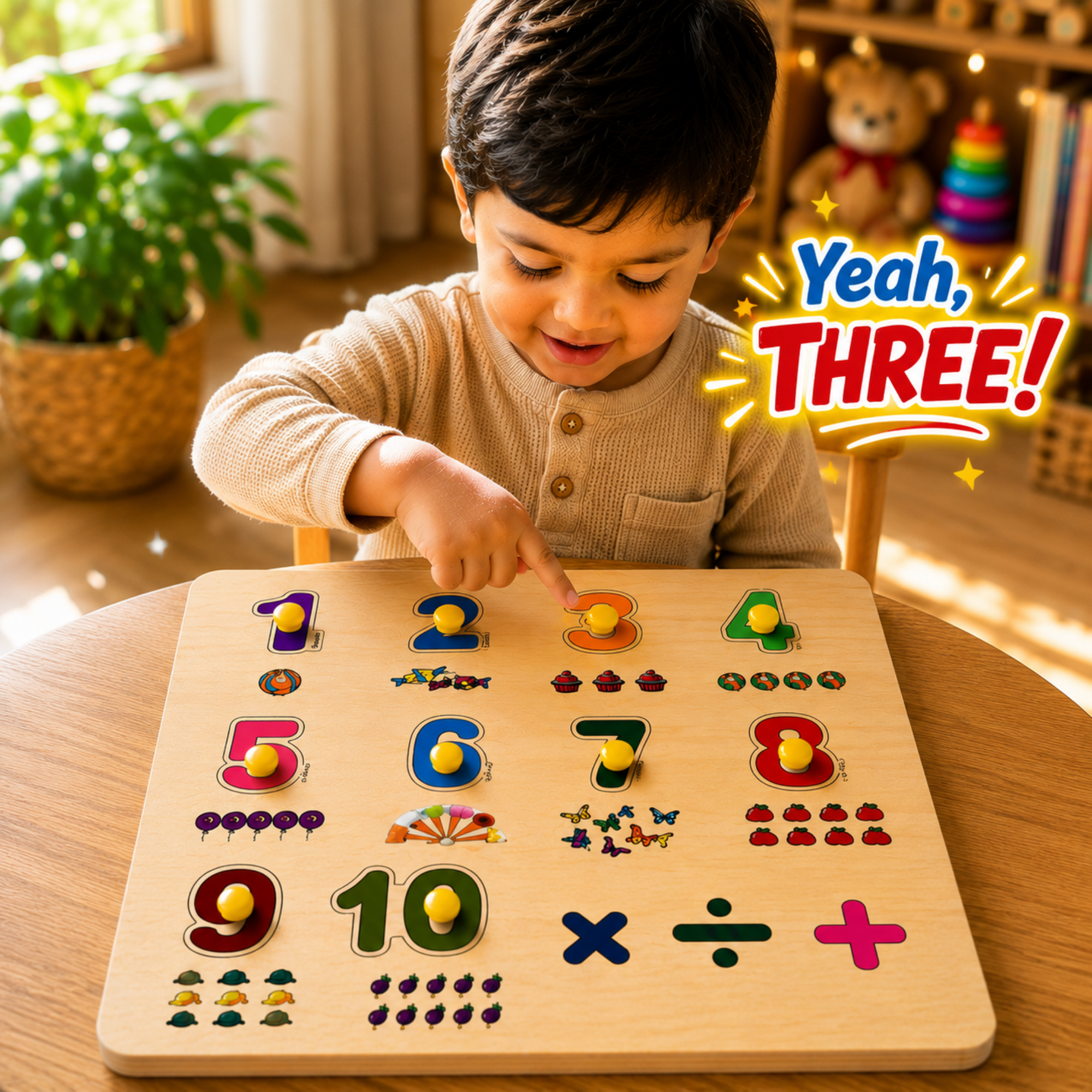
Common mistakes with counting toys
Assuming rote counting means the concept is understood
Reciting numbers in order is a memorisation skill, separate from understanding that each number represents a specific quantity. Check with a physical counting activity rather than a verbal recitation alone.
Jumping to written numerals before physical counting is solid
Number recognition is easier to build once a child has a physical sense of what each quantity actually looks like. Counting real objects first tends to make written numbers make more sense later.
Counting too fast or without pointing to each object
Rushing through a count, or counting without physically touching each item, weakens the one-to-one link the activity is meant to build. Slower, deliberate counting is more useful than fast recitation.
Skipping quantity comparison activities
"Which group has more?" is a genuinely useful early maths skill that's easy to overlook in favour of straightforward counting. Simple comparison games fill this gap.
Making numeracy feel like a test rather than play
Counting snacks, steps, or toys during ordinary activities builds the same skill as a dedicated counting toy, often with less pressure than a formal "let's practise numbers" session.
Balancing numeracy with other skills
If you're deciding how much of your toy rotation should focus on numeracy versus other areas, our fine motor skills guide and early literacy guide use the same sub-skill approach, and a well-rounded set usually mixes all three rather than concentrating heavily on one.
Keeping a numeracy set rotating
Counting toys benefit from rotation just like any other category — once one-to-one correspondence with small numbers is solid, a higher-count peg board or a comparison game keeps the challenge appropriate. See our toy rotation planner for how to manage this alongside other categories.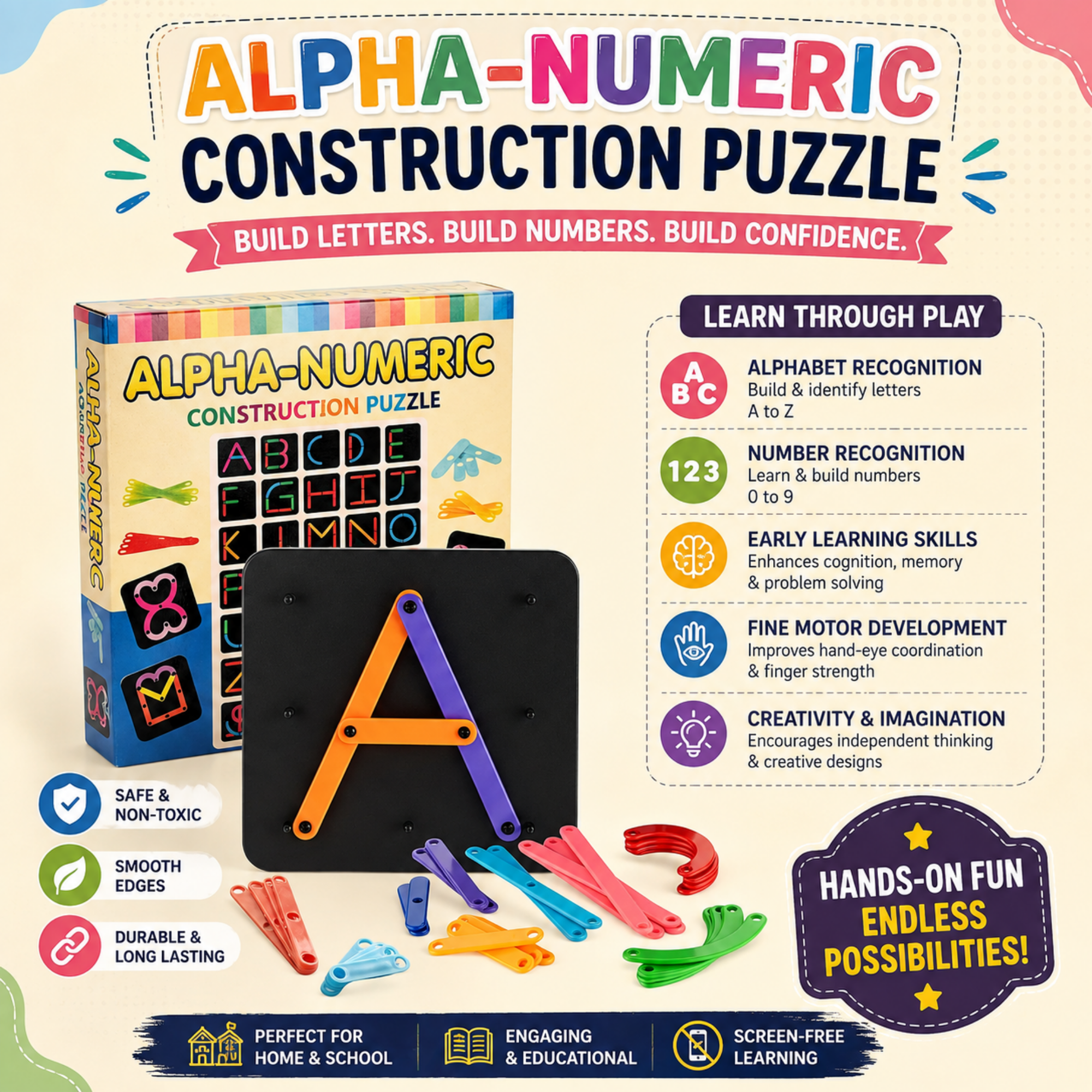
Numeracy play while travelling
Storing a numeracy toy set at home
Counting toys and number cards are generally compact and stack well. Our small apartment storage guide covers how to keep a set like this organised without much space.
How these recommendations are tested
The categories above follow the same evaluation approach used across every skill area at BuGBee, described in our Toy Lab methodology — observed through real, repeated use rather than assumed from a product description.
Buying for a classroom or in bulk
If you're stocking a preschool numeracy corner or need consistent sets across a classroom, see our bulk sourcing guide for what to check before ordering multiple units of the same counting toy.
If you're not sure this is the right category yet
If numeracy toys aren't holding attention or seem mismatched to your child's current stage, our toy decision guide and our shape sorter vs puzzle comparison can help you check whether an earlier foundational skill needs more attention first.
When should you ask for help choosing?
Ask for help if you're unsure whether your child is ready for number recognition versus still building one-to-one correspondence, or if a counting toy isn't holding attention. Share the exact age and what you've noticed during counting attempts — this narrows the choice faster than a general "counting toys" search.
Building an early numeracy set?
BuGBee Toys is an educational toy store in Rajajinagar, Bengaluru, offering peg boards, number cards, counting toys and other early maths activity toys. Call or WhatsApp +91 9986003534 and share your child's age and current counting stage, or visit the store in Rajajinagar to see options in person.
Frequently asked questions
What toys teach a child to count?
Peg boards, physical counting toys, and posting toys counted aloud build the strongest foundation, since they connect a number word to an actual object rather than just reciting a sequence.
What is one-to-one correspondence?
It's the skill of matching exactly one number word to exactly one object as you count, rather than saying numbers faster or slower than the objects are being touched. It's a stronger sign of real counting understanding than reciting numbers in order.
My child can count to 20 but seems confused with 5 objects. What's happening?
This usually means rote counting is ahead of one-to-one correspondence, which is common. Practising slow, deliberate counting with physical objects tends to close this gap.
When should number recognition be introduced?
Once physical counting with real objects is fairly reliable, usually somewhere in the 3 to 4 year range, though this varies by child.
Are quantity comparison games necessary, or is counting enough?
Comparison - recognising which group has more without counting each one - is a distinct and useful skill that pure counting practice doesn't automatically build. It's worth including separately.
Do I need a special toy to teach counting, or can everyday objects work?
Everyday objects work well - counting steps, fruits, or toys during normal routines builds the same skill as a dedicated counting toy, often with less pressure.