


Montessori Toys for Toddlers
"Montessori" appears on toy packaging almost as often as "educational" does, and the two words have started to blur together. A toy doesn't become Montessori-inspired just by being made of wood or coming in muted colours. The term actually refers to a specific set of design principles principles you can check for yourself, rather than taking the label's word for it. This guide covers what those principles are and how to spot a toy that genuinely follows them.
The short answer
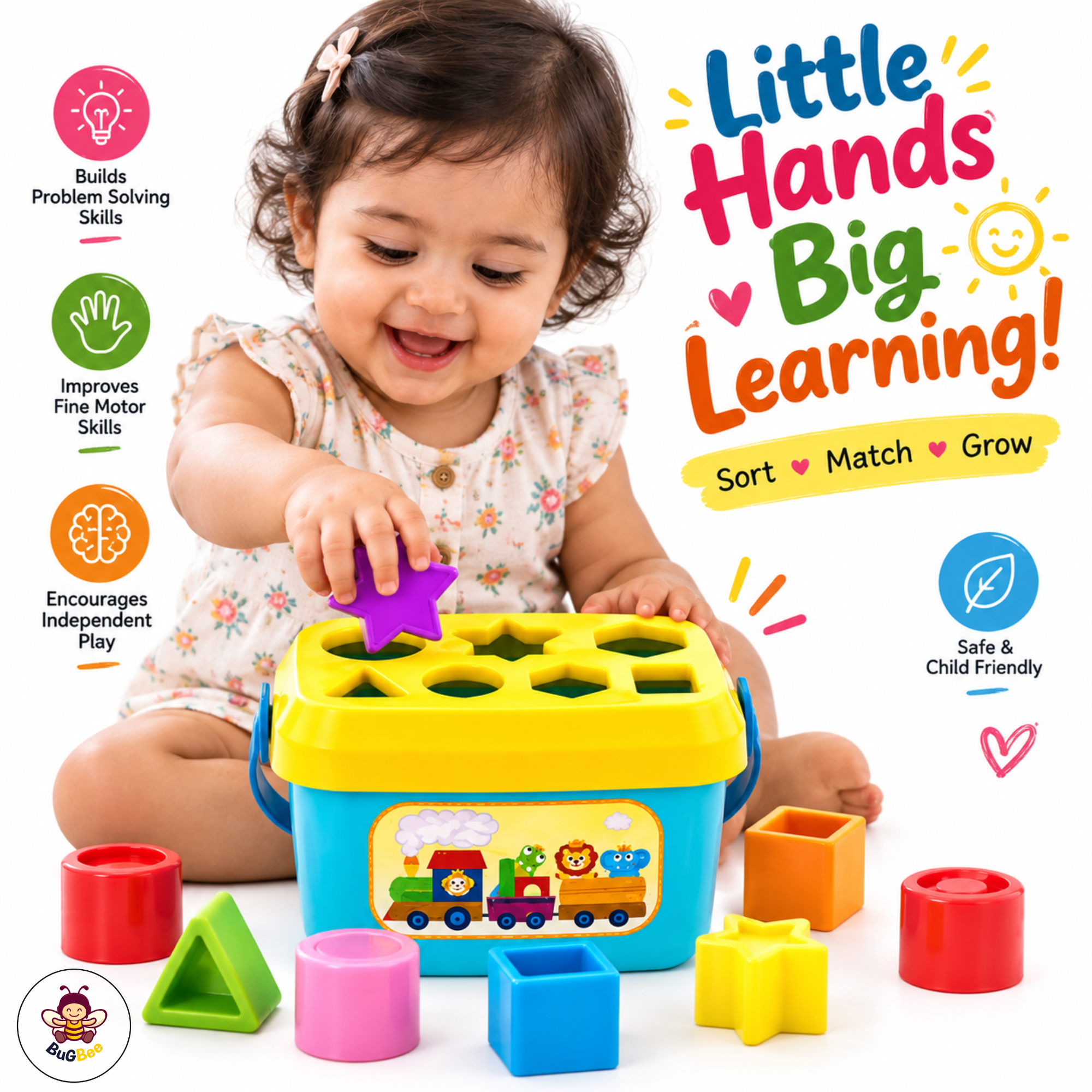
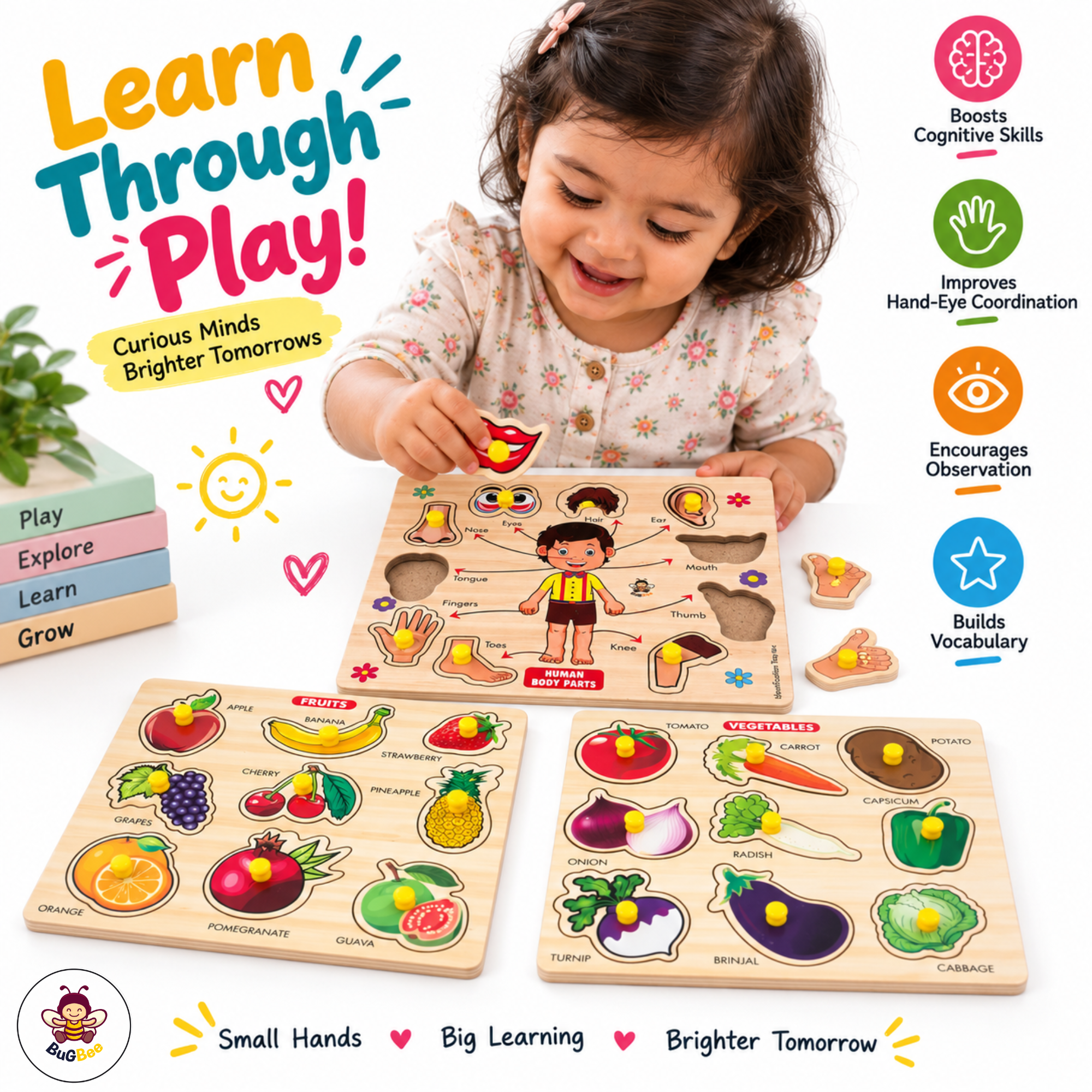
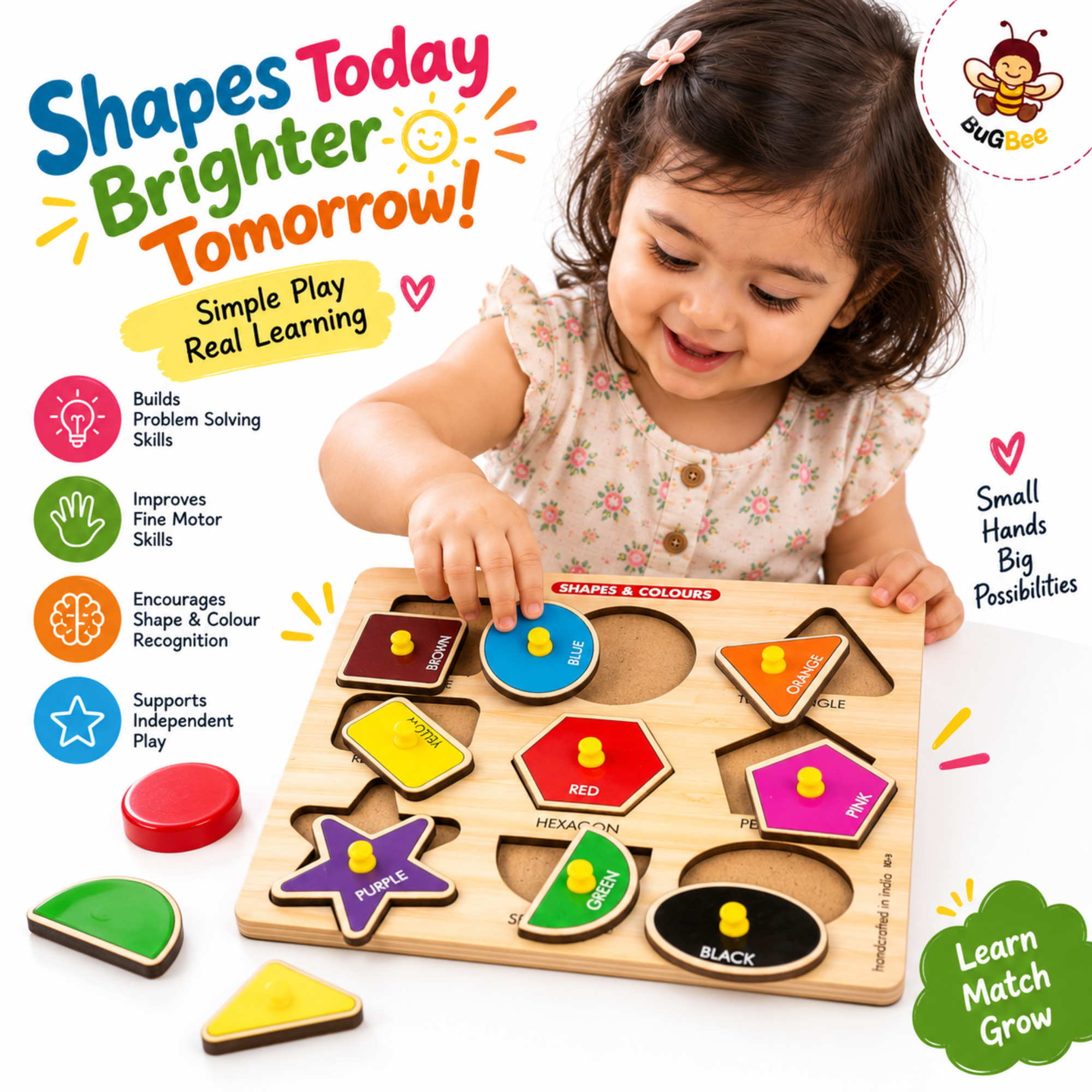
A genuinely Montessori-inspired toy is simple, has one clear purpose, is self-correcting so a child can tell if they've succeeded without an adult confirming, is made from natural materials where practical, and is scaled to a child's own hands and abilities rather than a smaller version of an adult object. Wooden puzzles, peg boards, shape sorters and simple sorting trays usually meet most of these. A toy with flashing lights, background music, and six different modes usually doesn't, regardless of what colour the box is.
The five principles behind the label
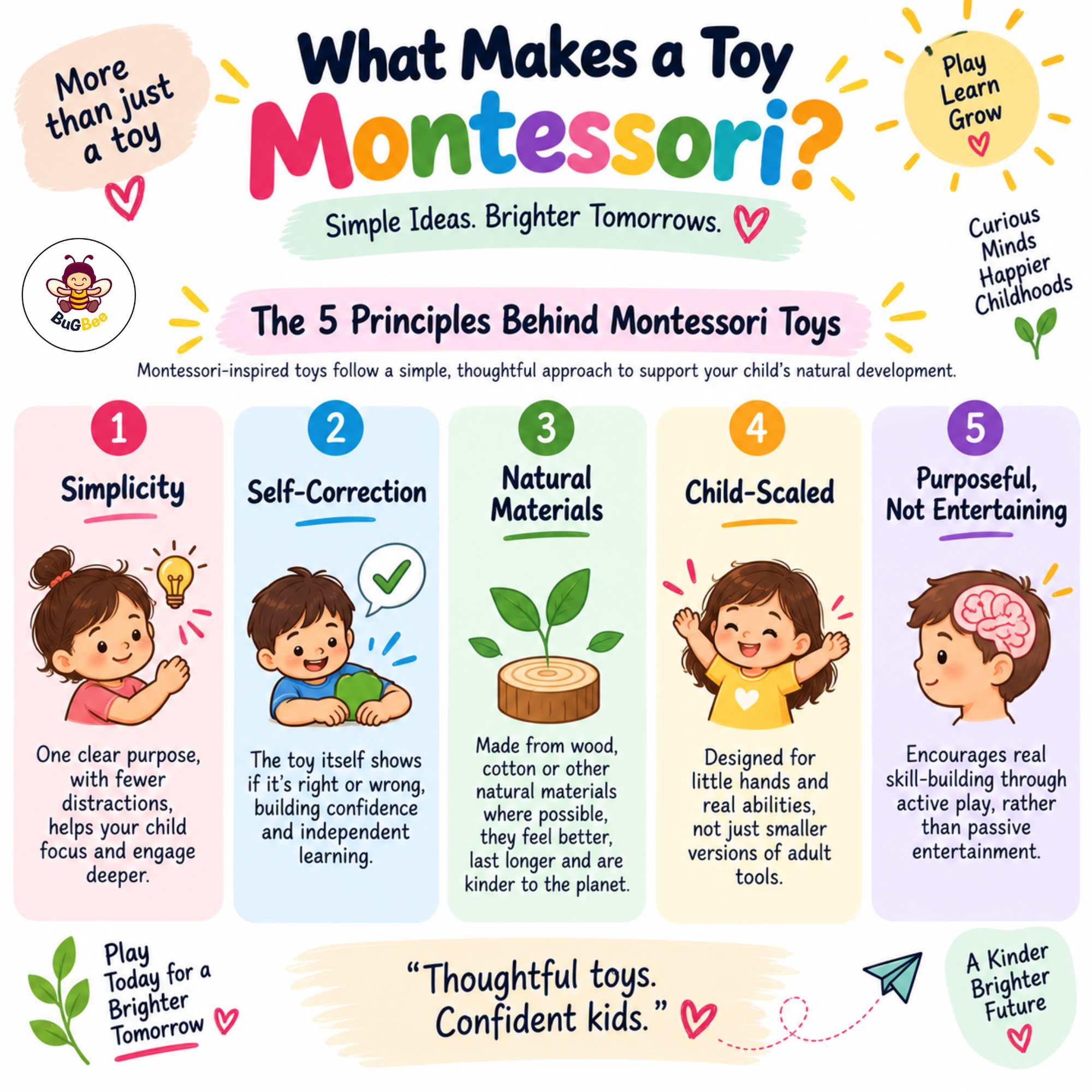
| Principle | What to check |
|---|---|
| Simplicity | One clear task or purpose, rather than many features competing for attention at once |
| Self-correction | The toy itself shows whether an attempt worked, without needing an adult to judge it |
| Natural materials | Wood, cotton, or other natural materials where practical, rather than bright plastic and synthetic sound effects |
| Child-scaled | Sized and weighted for a child's own hands, not a miniature adult object that's still awkward to grip |
| Purposeful, not entertaining | Designed to build a real skill through the child's own effort, rather than to entertain passively |
Self-correction is worth checking most carefully, since it's the principle most often missing from toys marketed as Montessori. A puzzle piece that simply doesn't fit when placed wrong meets this test. A toy that needs an adult to say "yes, that's right" every time doesn't, no matter how it's marketed.
Is "Montessori" a real standard, or just a marketing word?
There's no single certifying body that controls who can use the word "Montessori" on a toy, which is exactly why the label varies so much in how strictly it's applied. Some products genuinely follow the principles above; others use the word because it signals quality without the toy actually matching the philosophy. Checking the toy itself against the five principles table is more reliable than trusting the label alone.
Montessori-style toys by age
| Age range | Typical Montessori-style toys | See our age guide |
|---|---|---|
| 1–2 years | Simple posting boxes, stacking rings, single-shape sorters | Toys for 1-year-olds |
| 2–3 years | Multi-shape sorters, knob puzzles, peg boards | Toys for 2-year-olds |
| 3–4 years | Practical life materials, sorting trays, simple tracing boards | Toys for 3-year-olds |
| 4–6 years | Number and letter materials, more detailed puzzles, structured building sets | Toys for preschoolers |
A quick test before buying
- ☐ Does it do one thing clearly, rather than several things at once?
- ☐ Can a child tell if they've succeeded without you confirming it?
- ☐ Is it sized comfortably for a child's own hands?
- ☐ Does it require the child's own effort to work, rather than a battery or a button doing most of the job?
A toy meeting most of these is likely to function as a genuine Montessori-style toy regardless of what the packaging claims, and a toy failing most of them probably isn't, regardless of what the packaging claims either.
How this connects to our other guides
Montessori-style design principles overlap heavily with several of our other guides, since the same features that make a toy Montessori-appropriate also tend to make it good for independent play and effective at building fine motor skills. Our shape sorter vs puzzle comparison covers two of the most common early Montessori-style toys directly if you're deciding between them.
Common mistakes with Montessori-labelled toys
Assuming wood alone makes a toy Montessori
Material is one part of the picture, not the whole thing. A wooden toy that's overly complicated or not self-correcting doesn't meet the core principles just because of what it's made from.
Buying a large set instead of a few well-chosen pieces
Montessori-style play favours a smaller, purposeful set over a large collection presented all at once. Our toy rotation planner reflects this same principle.
Correcting a child too quickly during play
Part of the self-correction principle is letting the toy, not the adult, provide the feedback. Stepping in immediately at every mistake removes this benefit.
Expecting strict adherence to be necessary for a toy to be useful
A toy doesn't need to meet every principle perfectly to be worthwhile. The five principles are a useful lens for evaluating quality, not a pass-or-fail test for whether a toy is worth buying.
Assuming Montessori toys are only for a specific parenting style
The underlying principles simplicity, self-correction, purposeful design are broadly useful regardless of whether a family follows a particular educational philosophy at home.
Getting more from a Montessori-style toy already owned
Simplicity doesn't mean limited play value. Our guide on getting more out of one toy shows how a single peg board, sorter or puzzle all typically Montessori-style can be extended through several stages of play well beyond its first, obvious use.
Montessori toys for small homes and travel
Caring for Montessori-style wooden toys
Most Montessori-style toys are wooden, which means they need the same careful cleaning approach as any wooden toy. See our wooden toy cleaning guide and toy safety guide for how to keep them safe and in good condition over time.
Buying Montessori-style toys in bulk
If you're setting up a Montessori-inspired classroom corner or need multiple units of the same self-correcting toy, see our bulk sourcing guide for what to check before ordering in quantity.
How BuGBee evaluates Montessori-style toys
The same criteria used across every category in our Toy Lab methodology apply here, with particular attention to independent use and skill flexibility two areas where genuinely Montessori-style design tends to perform especially well.
When should you ask for help choosing?
Ask for help if you're not sure whether a specific toy genuinely follows Montessori principles, or if you're building a small, purposeful set rather than buying individual pieces one at a time. Share your child's age and current skills for the most useful recommendation.
Building a Montessori-inspired toy set?
BuGBee Toys is an educational toy store in Rajajinagar, Bengaluru, offering wooden puzzles, peg boards, shape sorters and other Montessori-inspired toys. Call or WhatsApp +91 9986003534 and share your child's age and current skills, or visit the store in Rajajinagar to see options in person.
Frequently asked questions
What makes a toy "Montessori" rather than just educational?
A genuinely Montessori-style toy is simple, self-correcting, made from natural materials where practical, scaled to a child's hands, and designed to build a skill through the child's own effort rather than to entertain passively.
Is every wooden toy a Montessori toy?
No. Material is just one of several principles. A wooden toy still needs to be simple, purposeful and self-correcting to genuinely reflect the Montessori approach.
Do I need to follow Montessori parenting to use these toys?
No. The design principles behind these toys simplicity, self-correction, purposeful design are useful regardless of whether a family follows a specific educational philosophy at home.
Are electronic toys ever considered Montessori-style?
Rarely. Most electronic toys with lights, sounds and multiple automatic functions work against the simplicity and self-correction principles that define this approach.
How many Montessori-style toys should a toddler have out at once?
A small, rotated set works better than a large collection all at once, consistent with the general toy rotation approach covered in our other guides.
Is there a certification that confirms a toy is genuinely Montessori?
No single certifying body controls the term, so the label alone isn't a reliable guarantee. Checking the toy against the five principles in this guide is more reliable than trusting the packaging.